The fastest way to make a monitoring system useless is to send too many alerts. When phones buzz all day with messages that turn out to be nothing, people learn to ignore them. Then the one alert that matters is missed. This is alarm fatigue, and it affects hospitals, control rooms and facilities teams alike.
Good monitoring is not about collecting every reading. It is about sending the right message to the right person at the right time.
Key takeaways
Too many alarms means none get attention.
Every alert needs an owner and an action.
Time delays and correlation remove most false alarms.
Review and tune alerts regularly.
1. Every alert needs an owner
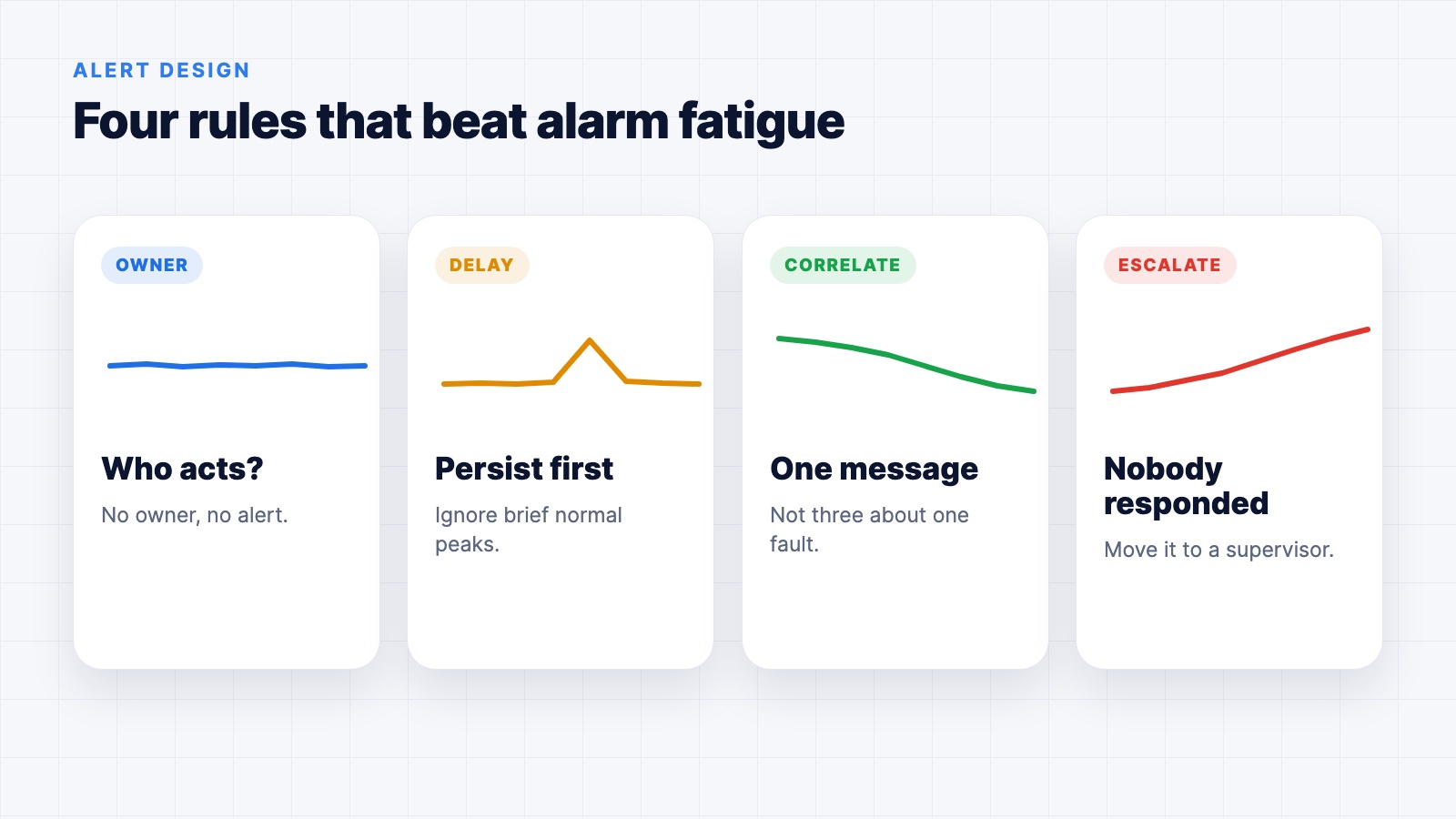
Before setting up an alert, ask who will act on it and what they will do. If nobody can answer, it should be a report or a dashboard indicator, not an alert.
2. Use time delays, not just thresholds
Many readings cross a threshold briefly for normal reasons: a cold room during a delivery, CO₂ during a short meeting, current during a motor start. Requiring a condition to persist for a set time removes most false alarms without hiding real problems.
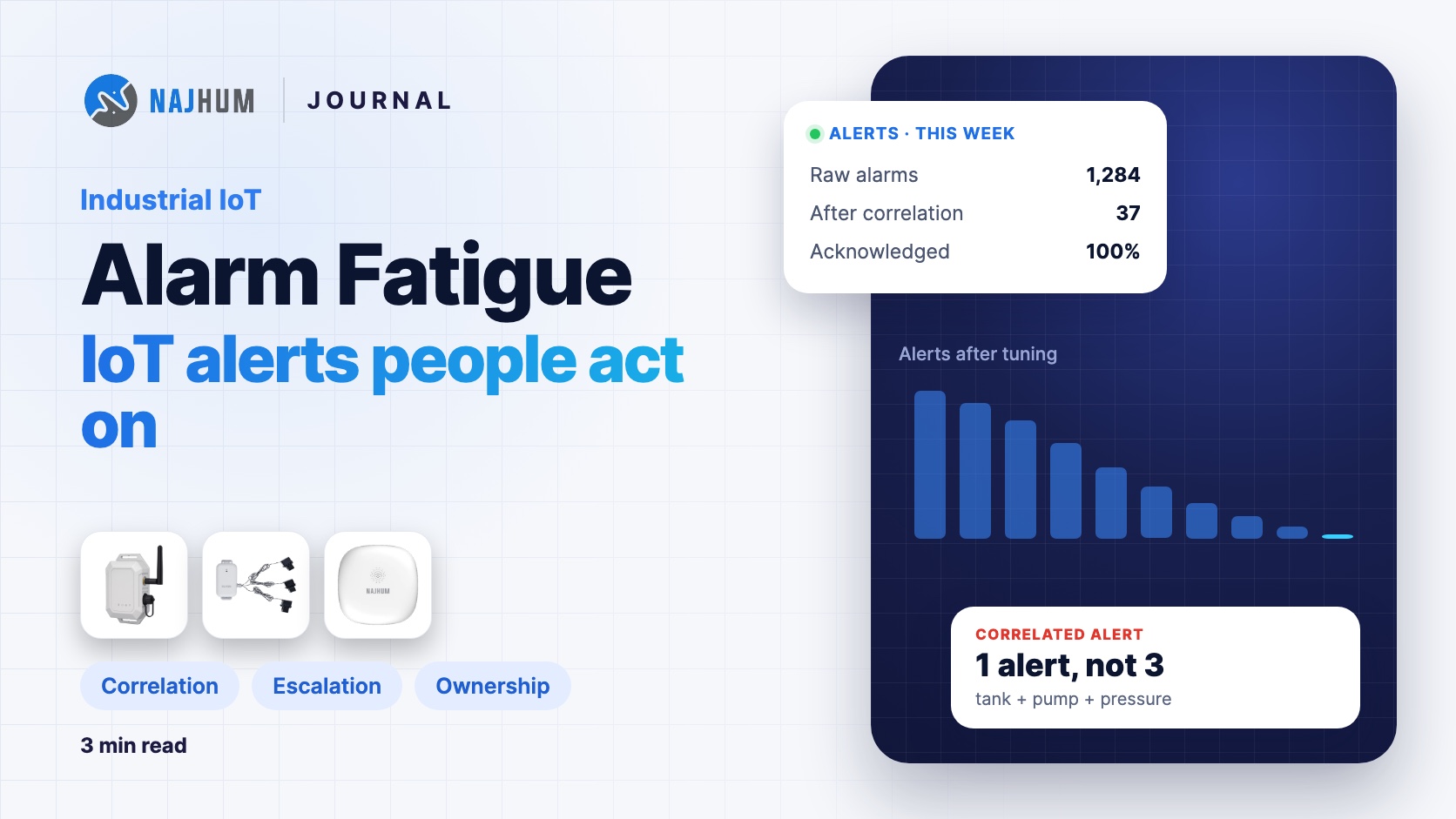
Hundreds of raw alarms can become a handful of alerts that people actually act on.
3. Correlate related readings
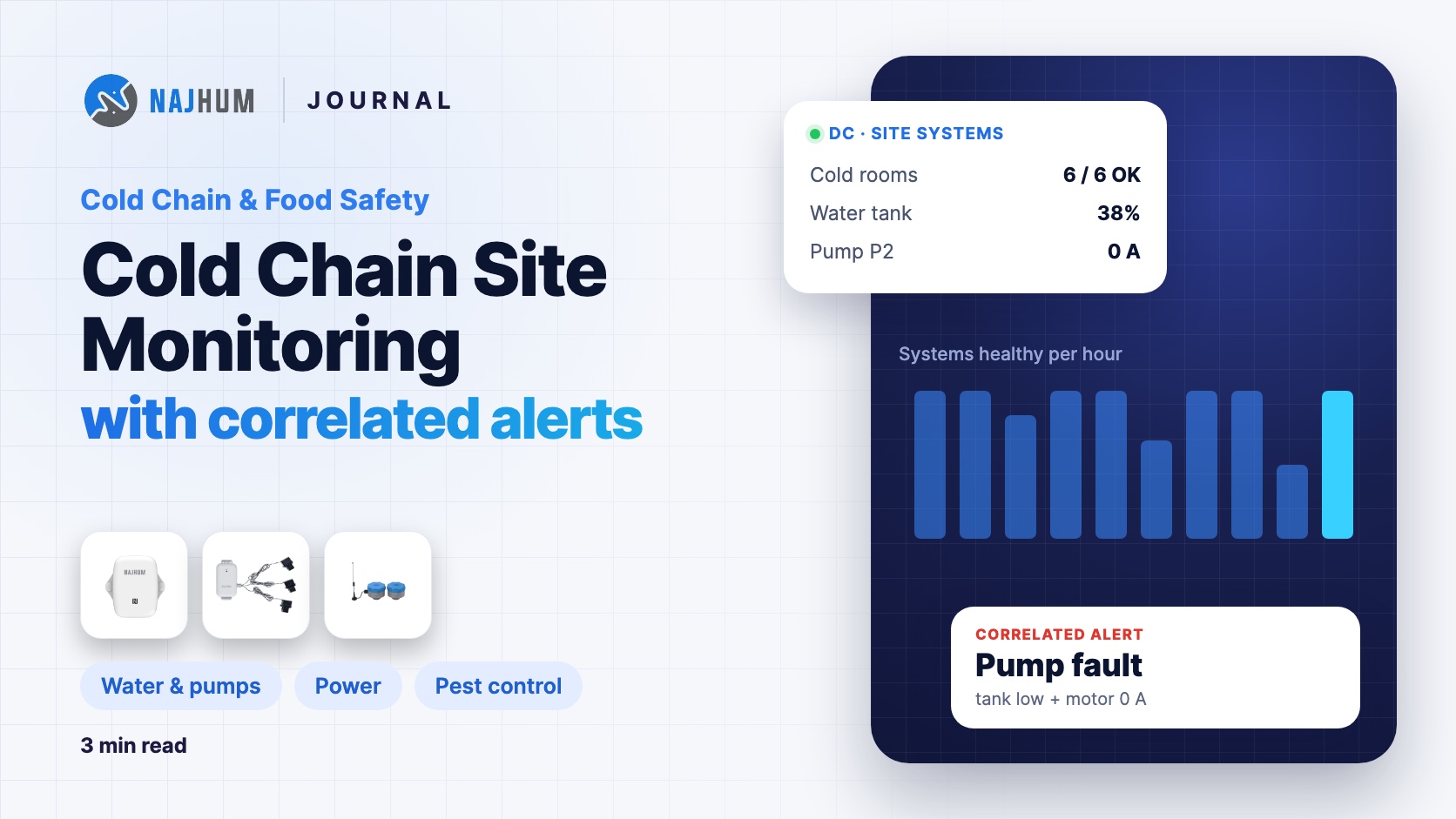
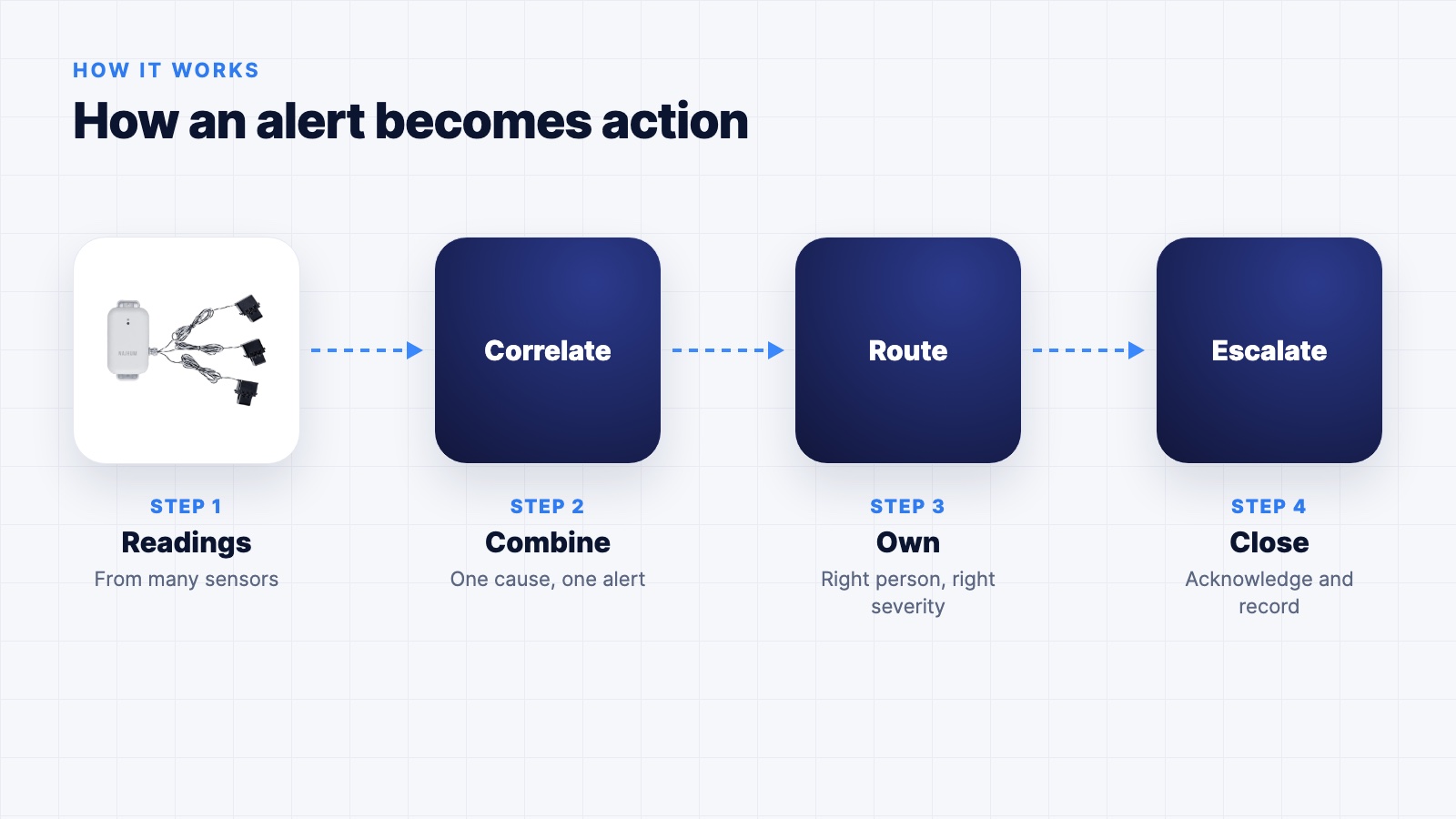
Separate alarms for “tank low”, “pump stopped” and “pressure low” are three messages about one problem. A correlated alert, such as “Tank falling and pump at 0 A: pump has stopped”, is one message with a likely cause. IoTRICs builds these correlations so the team receives fewer, clearer alerts.
4. Separate severity levels
Not everything is urgent. Use levels such as critical, major and minor, and route them differently. Critical alerts may call the on-duty technician; minor ones may wait for the morning review.
5. Escalate when nobody responds
If an alert is not acknowledged within an agreed time, it should move to a supervisor. Escalation ensures nothing is lost, and acknowledgement records show how the team responded.
6. Monitor the monitors
A sensor with a flat battery or a gateway that has gone offline is a silent risk. Device health alerts should go to whoever maintains the system, not to operations staff.
7. Review and tune regularly
Look at which alerts fired most often, which led to real action and which were ignored. Adjust thresholds and delays based on what you learn. Alert design is never finished on day one.
8. Close the loop
Record what was found and done for each alert. Over time, this builds knowledge about failure causes and helps new team members learn the site.
Frequently asked questions
What is alarm fatigue?
When people receive so many alarms that they start ignoring them, and miss the important one.
How do correlated alerts help?
They combine related readings into one alert with a likely cause.
How often should alerts be reviewed?
Regularly, especially in the first weeks, using which alerts led to real action.
Build alerts your team trusts.
Correlated, owned alerts are at the heart of IoTRICs. Book a demo to see how alerts move from detection to resolution.