Across the UAE and wider GCC, many labour accommodations, construction camps, farms, remote facilities and older communities are not connected to a main sewer. Wastewater is held in underground tanks and collected by tanker. When that collection is late, the tank overflows. When it is too early, money is spent moving a half-empty tank.
Smart sewage tank monitoring replaces guesswork with a measured level for every tank, so collections are scheduled on facts.
Key takeaways
Fixed tanker timetables either overflow in busy weeks or pay for half-empty trips.
A radar sensor under the cover measures the level without touching the wastewater.
Book collections on real levels and confirm each one with the level drop.
A portfolio view groups many tanks into efficient tanker routes.
The cost of an overflow
A sewage overflow is never just a maintenance issue. It creates health risks for residents and workers, odour complaints from neighbours, potential penalties from authorities, and a clean-up bill that is far higher than a routine collection. For operators managing many sites, a single overflow can also damage relationships with clients and communities.
Why fixed collection schedules don't work
Most sites book tankers on a fixed timetable: every Sunday and Wednesday, for example. But wastewater volumes are not fixed. Occupancy changes, Ramadan routines change usage patterns, and a leaking cistern can add a surprising volume. A fixed schedule either overflows in busy weeks or pays for unnecessary trips in quiet ones.
A level drop at 10:40 proves the tanker came. No drop, no invoice.
How remote level sensing works in a sewage tank
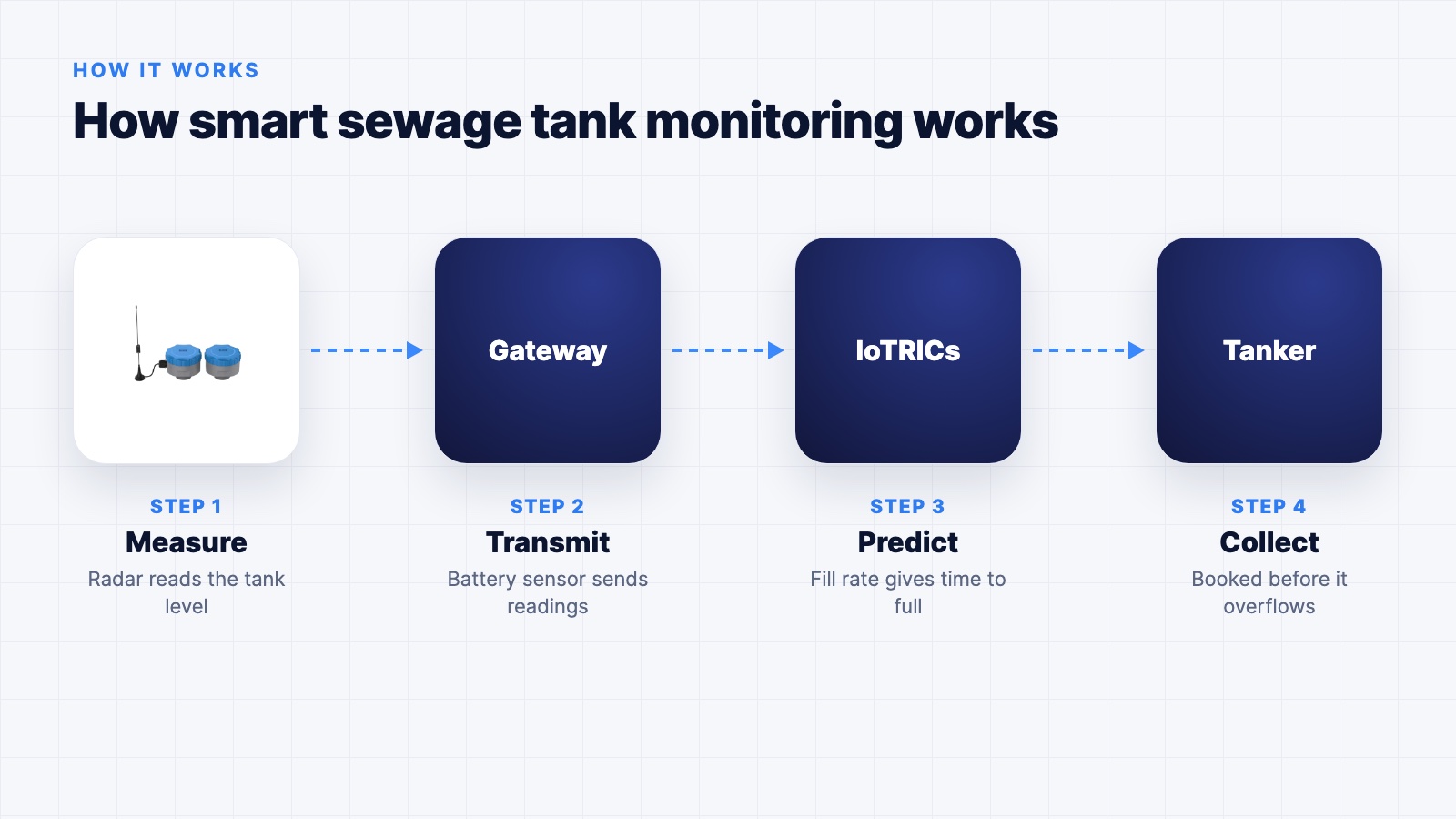
A non-contact radar sensor is mounted under the tank cover, above the liquid. Radar is well suited to this environment: it does not touch the wastewater, is not affected by foam or vapour in the way some technologies can be, and keeps working in high summer temperatures. The sensor sends level readings wirelessly, typically on battery power, so no cabling is needed through a hazardous chamber.
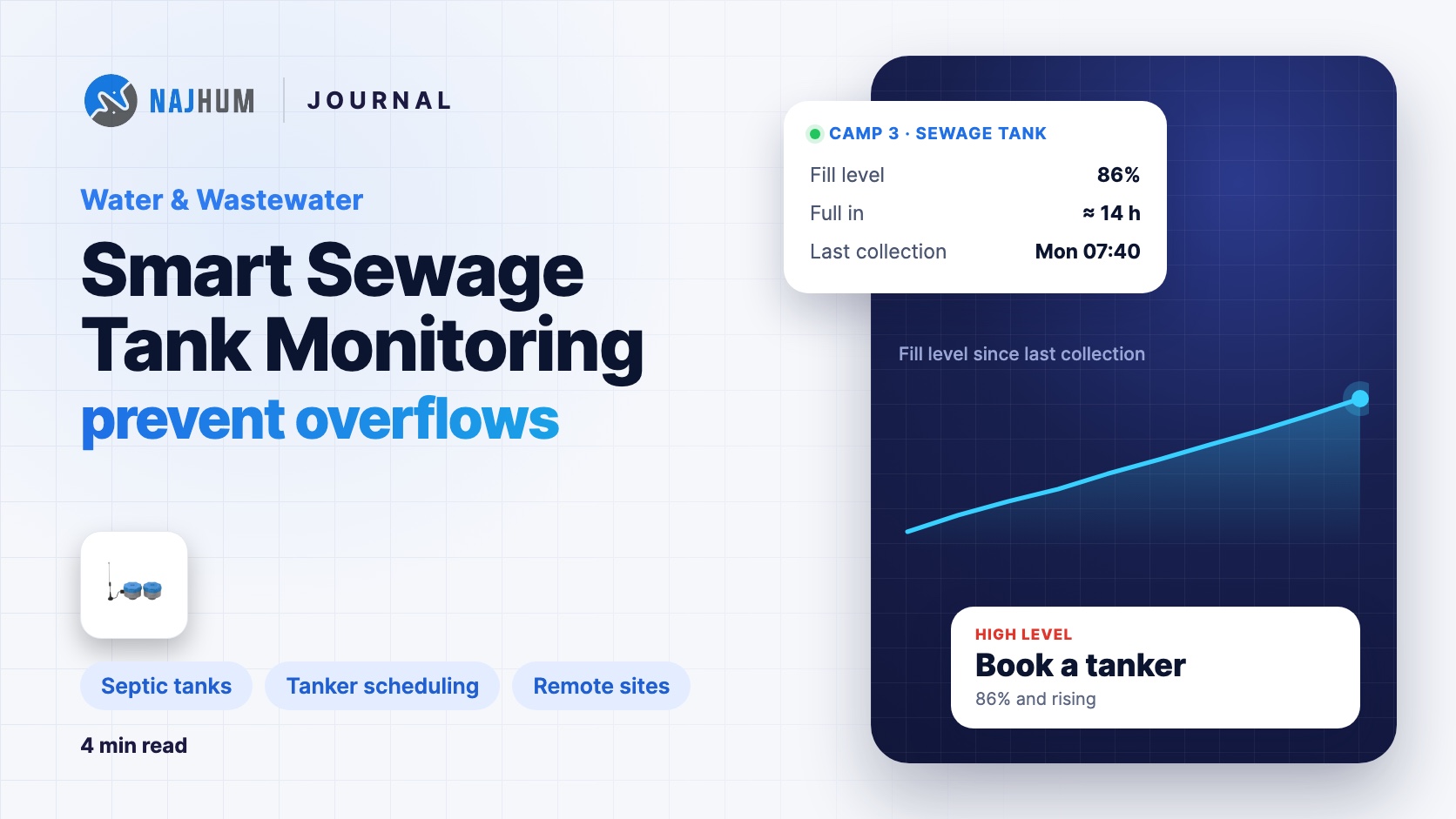
The readings appear in IoTRICs as a fill percentage and an estimated time until full, based on recent fill rate.
From level to action
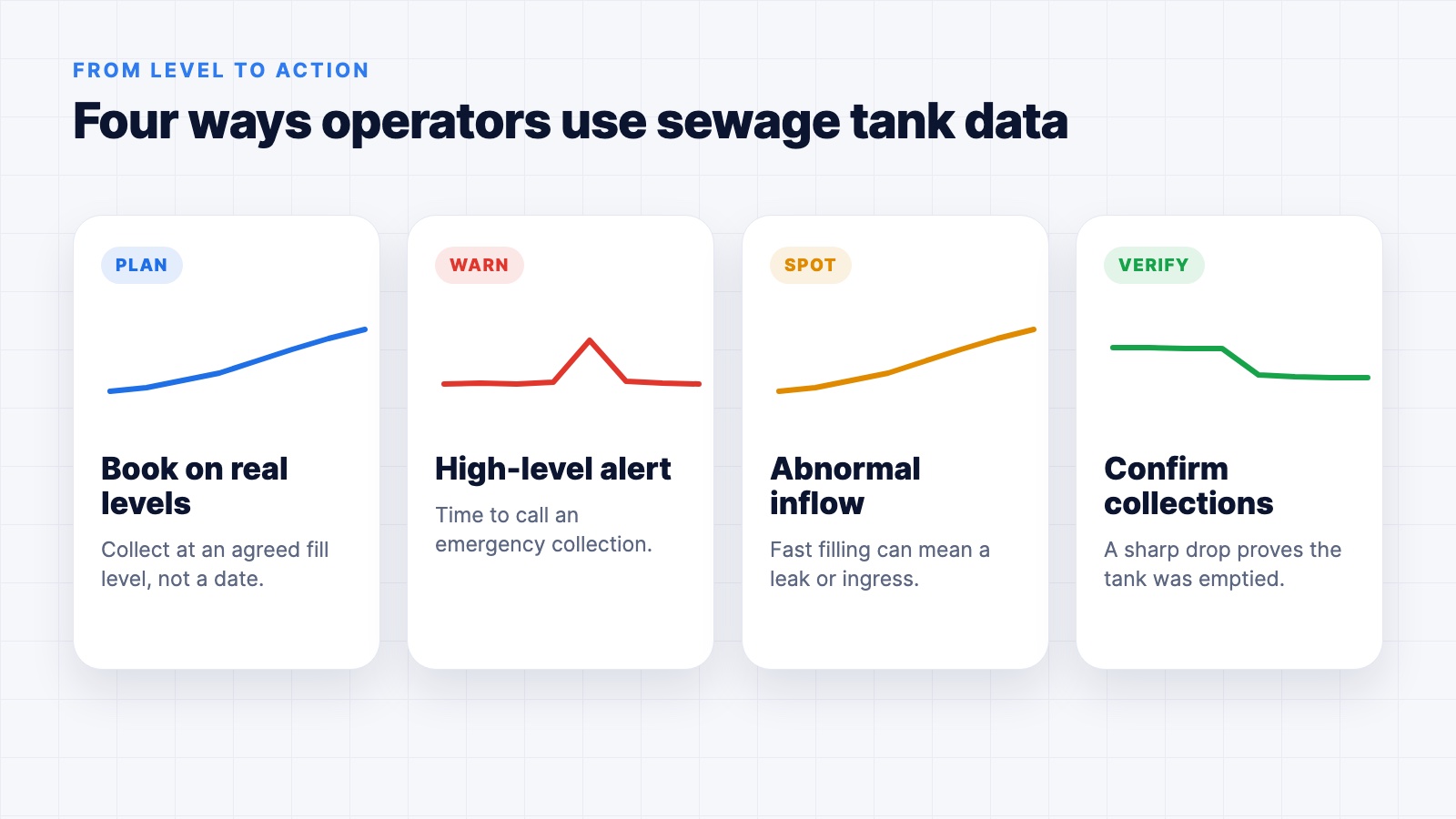
Plan collections: book a tanker when a tank reaches an agreed level, rather than on a calendar.
Warn early: a high-level alert gives the team time to call an emergency collection before the tank overflows.
Spot abnormal inflow: a tank filling much faster than usual may indicate a leak, a stuck valve or groundwater ingress.
Verify collections: a sharp drop in level confirms a tanker actually emptied the tank, which helps when reconciling contractor invoices.
Managing many tanks from one screen
The real benefit appears when you have dozens of tanks across different sites. A portfolio view shows which tanks need attention today and which can wait, so collections can be grouped into efficient routes. Operations managers can review fill-rate trends per site and adjust capacity planning when occupancy changes.
Questions to ask before you start
How many tanks, and how are they accessed (cover type, chamber depth)?
Who books the tanker today, and who should receive the alert?
What lead time does the tanker contractor need?
Is there network coverage at the site, or does the solution need its own connectivity?
A short site survey answers these questions and sets the alert levels around how your team actually works.
Frequently asked questions
Does radar work inside a sewage tank?
Yes. Radar is non-contact, so it measures from above the liquid and is suited to foam, vapour and summer heat.
Do sites need power or cabling?
Usually not. Battery-powered sensors and on-site gateways avoid running cables into the chamber.
How many tanks can one team manage?
A portfolio view shows every tank on one screen, so a small team can plan collections across many sites.
Stop paying for overflows.
Learn more about our smart sewage tank monitoring solution, or book a demo to see how tanks look on the IoTRICs platform.