In food retail, storage and production, a rodent sighting is more than an unpleasant moment. It can lead to product loss, failed audits, closure orders and reputational damage that lasts longer than the infestation. Yet most pest control programmes still depend on a technician visiting each bait station on a schedule and recording what they find.
Key takeaways
Scheduled trap checks leave long gaps between inspections.
Connected stations alert within minutes, with the exact location.
Technicians go to active stations first instead of opening every one.
Every detection and response is timestamped for audits.
The limits of scheduled inspections
Scheduled visits are valuable, but they leave long gaps. Activity that starts the day after an inspection may not be seen for a week or more. In a large warehouse or a supermarket with a busy back-of-house, that is enough time for a problem to grow.
Inspections also produce a lot of effort with little result. Technicians spend time opening stations that have seen no activity, while the one station that matters may be the last on the route.
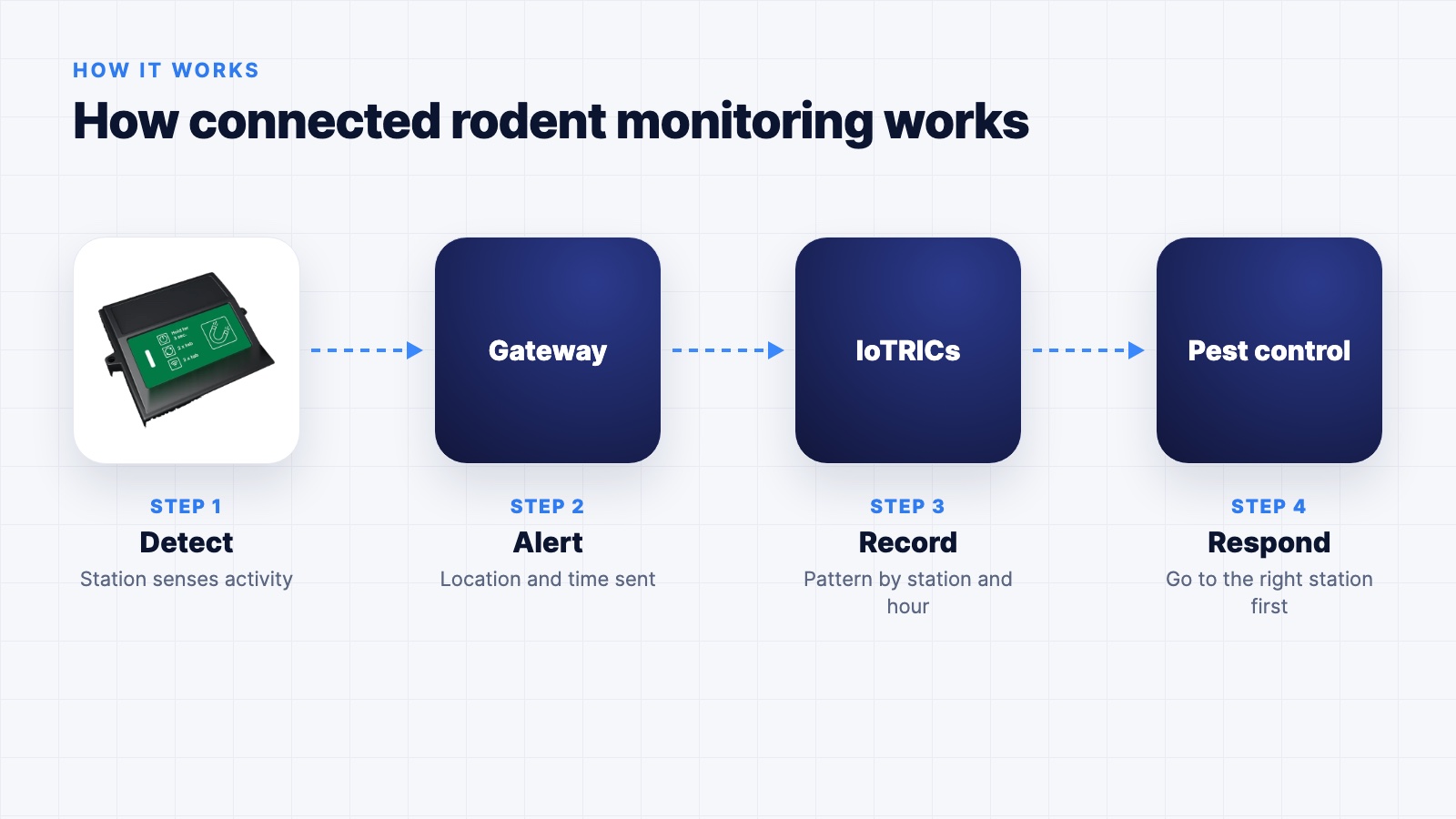
How connected rodent monitoring works
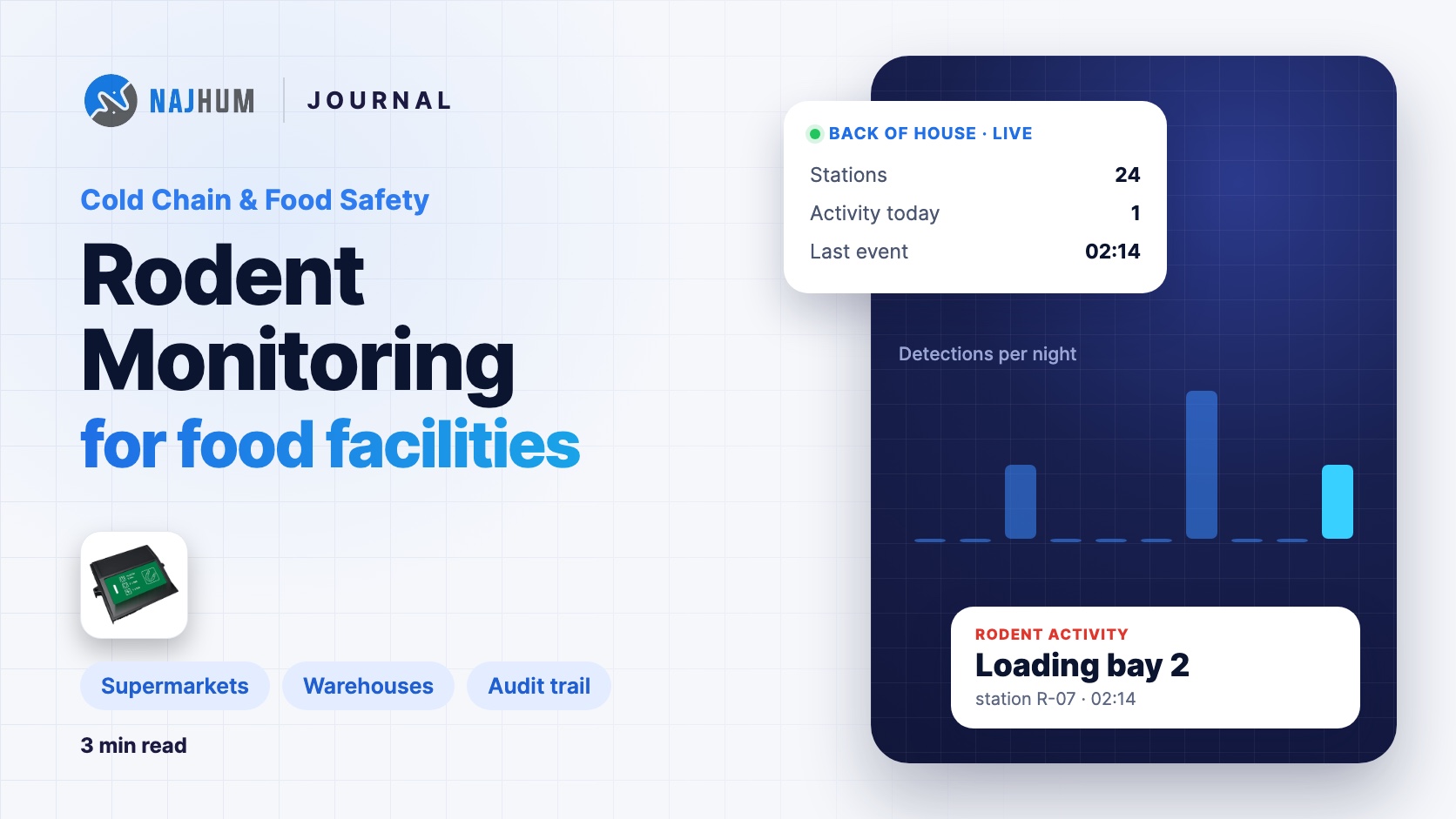
Connected monitoring stations detect when a rodent enters or triggers the station and send an alert wirelessly. The alert includes the station's location, so the facilities team and pest control provider know exactly where activity occurred and when.
Over time, the data shows patterns: which entry points are active, what times of day activity occurs, and whether treatments are working.
The station that matters is often the last one on the inspection route.
What changes for the team
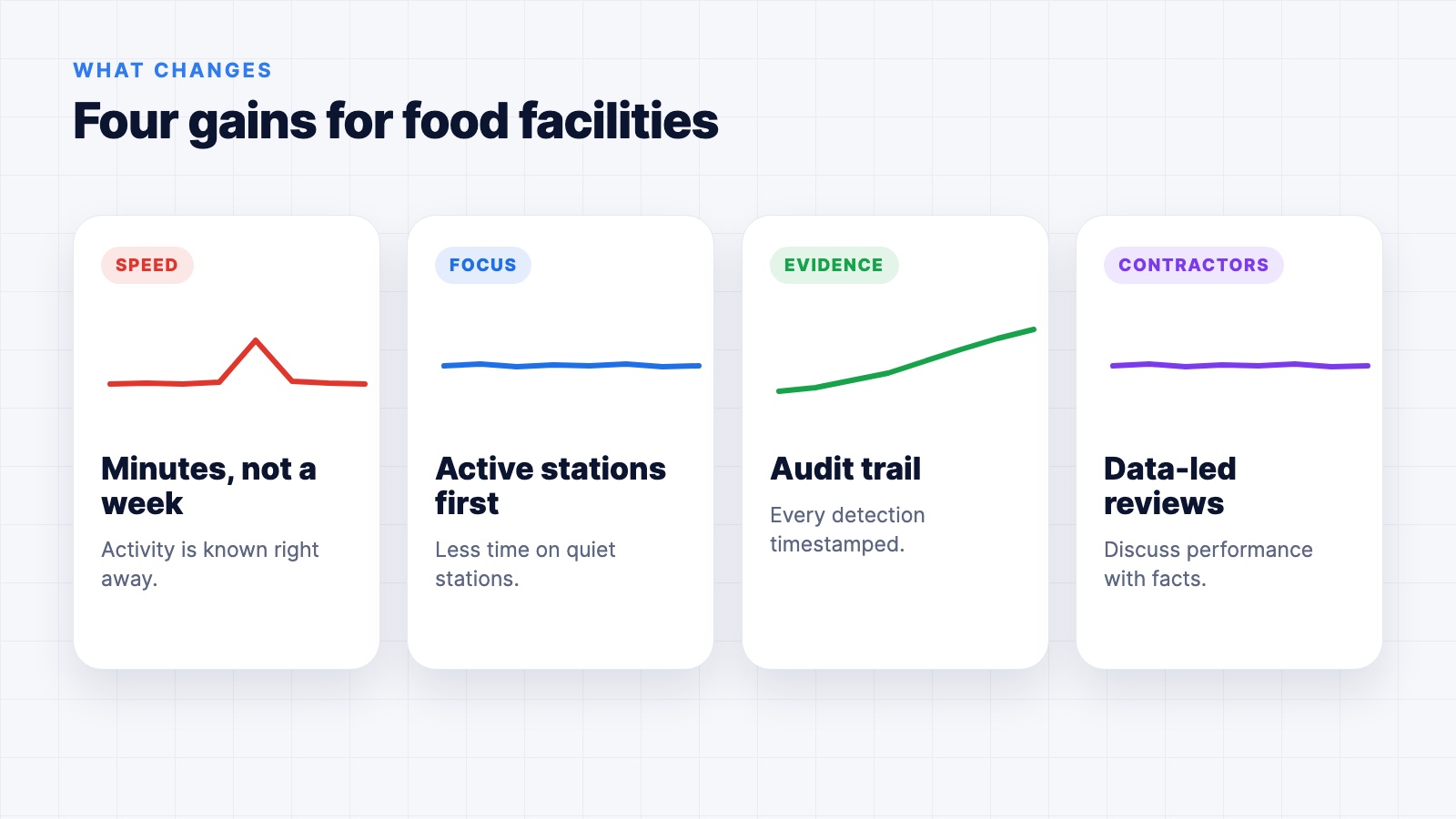
Faster response: activity is known within minutes, not at the next scheduled visit.
Focused effort: technicians go to stations with activity first and spend less time on quiet ones.
Evidence: every detection and response is timestamped, which supports food safety audits and client inspections.
Better conversations with contractors: pest control performance can be discussed using data rather than impressions.
Combine with other site signals
Rodent activity often relates to other conditions: a loading bay door left open overnight, a drainage problem, or waste that was not removed on time. When rodent alerts sit on the same platform as door sensors, bin levels and drainage monitoring, the root cause becomes easier to spot.
Where it fits best
Supermarket back-of-house and receiving areas
Cold stores and dry food warehouses
Central kitchens and food production
Hotel kitchens and stores
Getting started
Work with your existing pest control provider to choose station locations based on their knowledge of the site. Connected monitoring does not replace their expertise; it gives them better information and gives you a clearer view of the service.
Frequently asked questions
Does this replace our pest control provider?
No. It gives your provider better information and gives you a clearer view of the service.
Where are stations placed?
Your pest control provider chooses locations based on their knowledge of the site.
Can alerts be linked to other site data?
Yes. Rodent alerts sit with door, bin and drainage data on the same platform, which helps find root causes.
Catch rodent activity the night it starts.
Rodent monitoring is part of our supermarket and cold chain solutions. Discuss your project with Najhum.