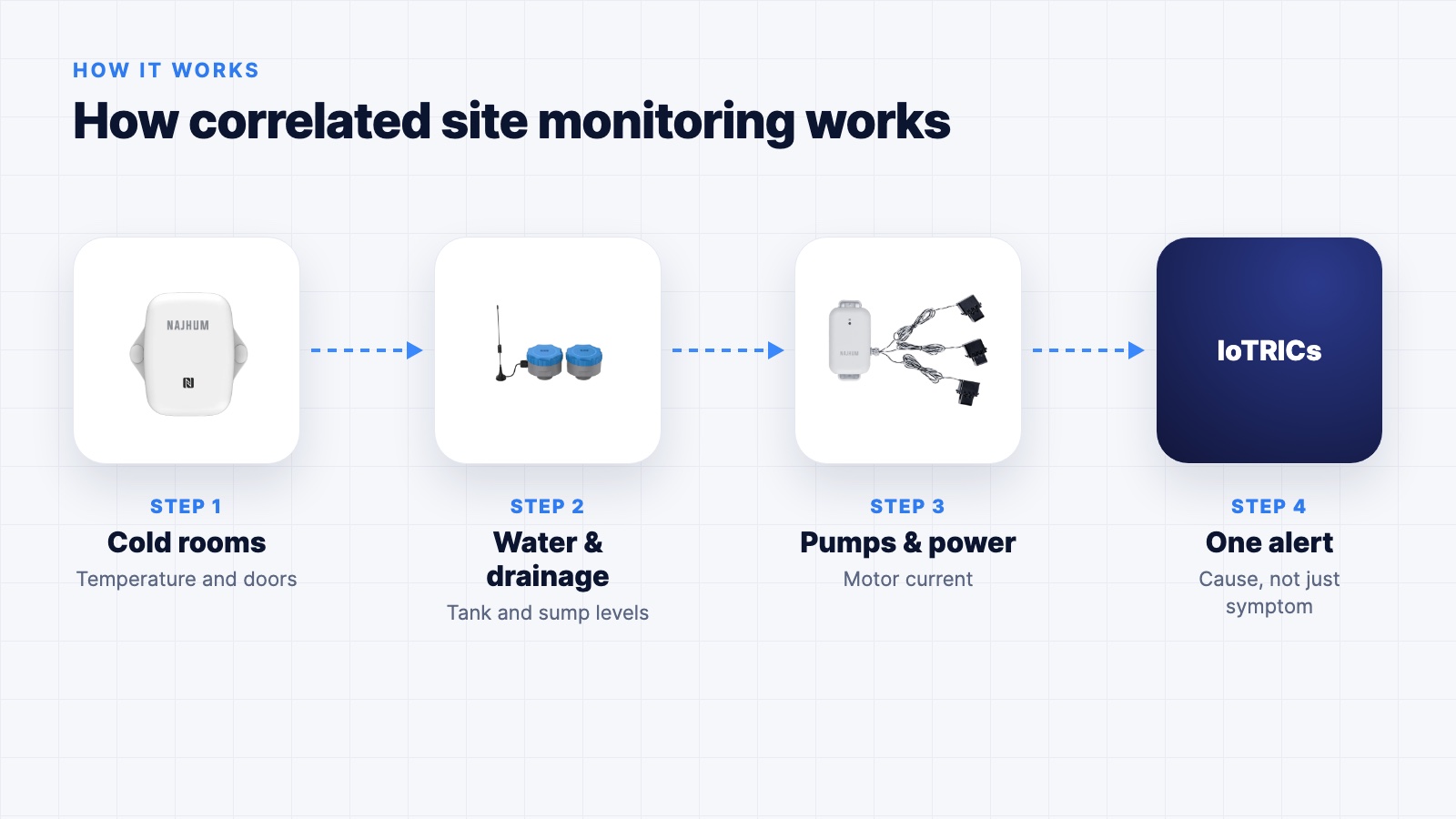
When people think of cold chain monitoring, they think of temperature. That is understandable: it is the number auditors ask about. But walk around a cold chain distribution centre and you will see that the cold rooms depend on many other systems. Condensers need power and water. Pumps move water and wastewater. Drainage must keep flowing. Pests must stay out.
When one of those systems fails, temperature is often the last thing to show it.
Key takeaways
Cold rooms depend on water, pumps, drainage, power and pest control.
Separate alarms for each system create noise and slow the response.
Correlated alerts name the likely cause, such as a stopped pump.
Start with the systems that failed in the past year.
The hidden dependencies
Water tanks feed cooling, cleaning and staff facilities.
Pump motors move water to where it is needed and remove wastewater.
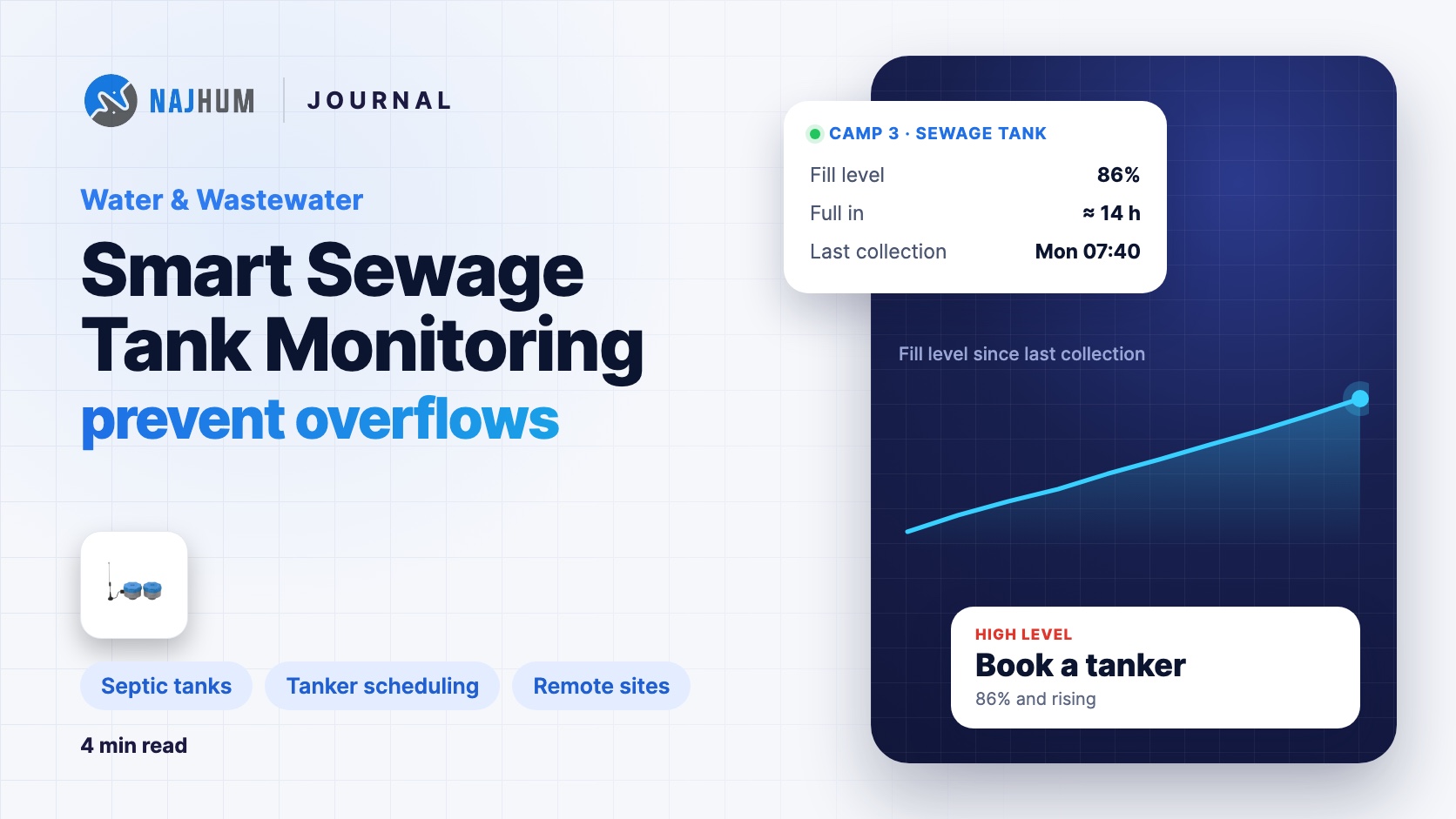
Sewage and drainage tanks must be emptied before they overflow into loading areas.
Electrical supply to refrigeration plant decides whether compressors run.
Pest control protects product and the site's food safety status.
Single-sensor alarms create noise
If each of these systems has its own alarm, the facilities team receives a stream of unrelated messages. A low tank level here, a high current there, a door open somewhere else. Each one requires someone to investigate from scratch, and the important signal can be missed among the routine ones.
Temperature is often the last thing to show that a site system has failed.
Correlation finds the cause
Correlated monitoring combines readings that belong together. A few examples of what that looks like on the IoTRICs platform:
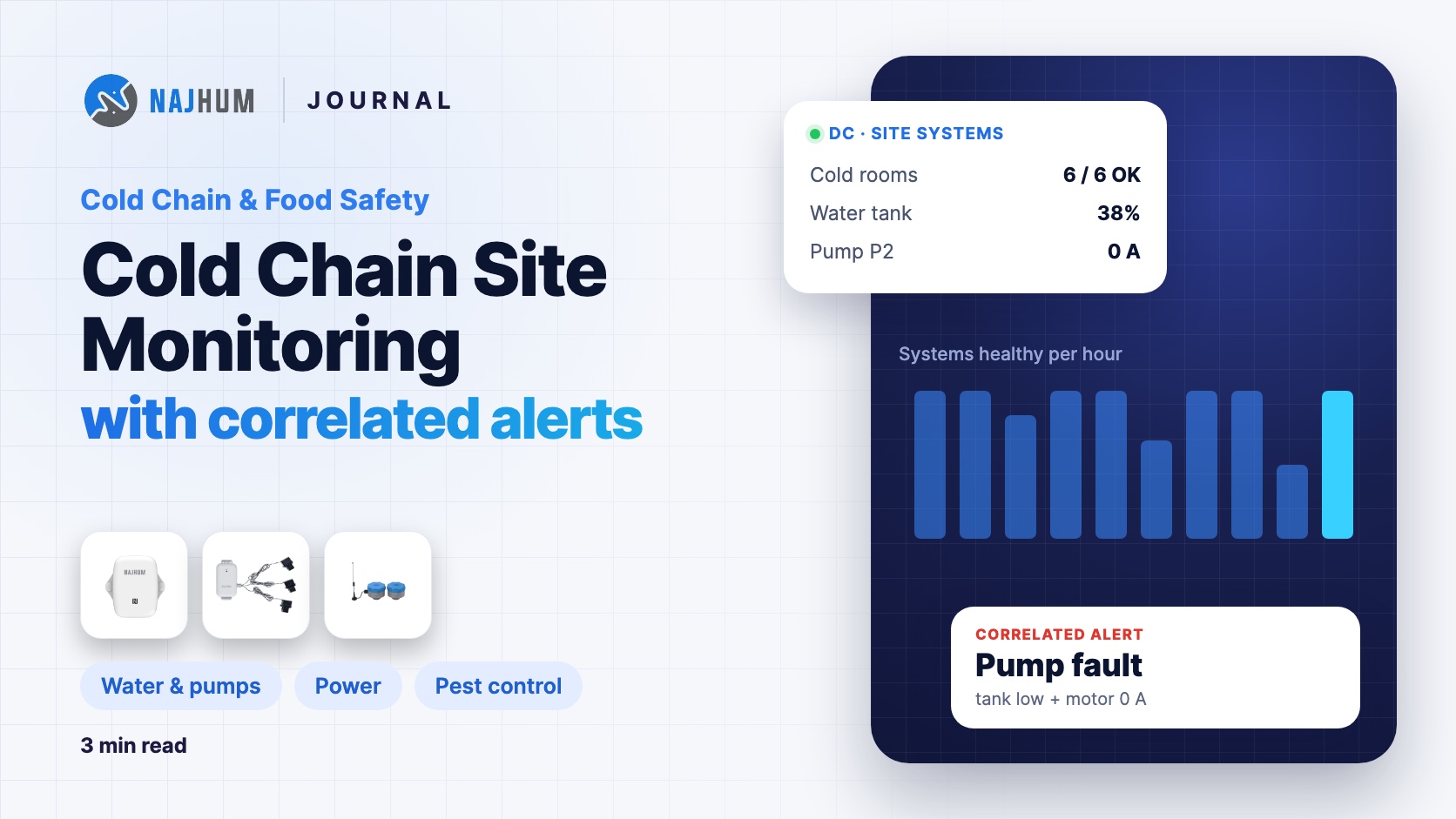
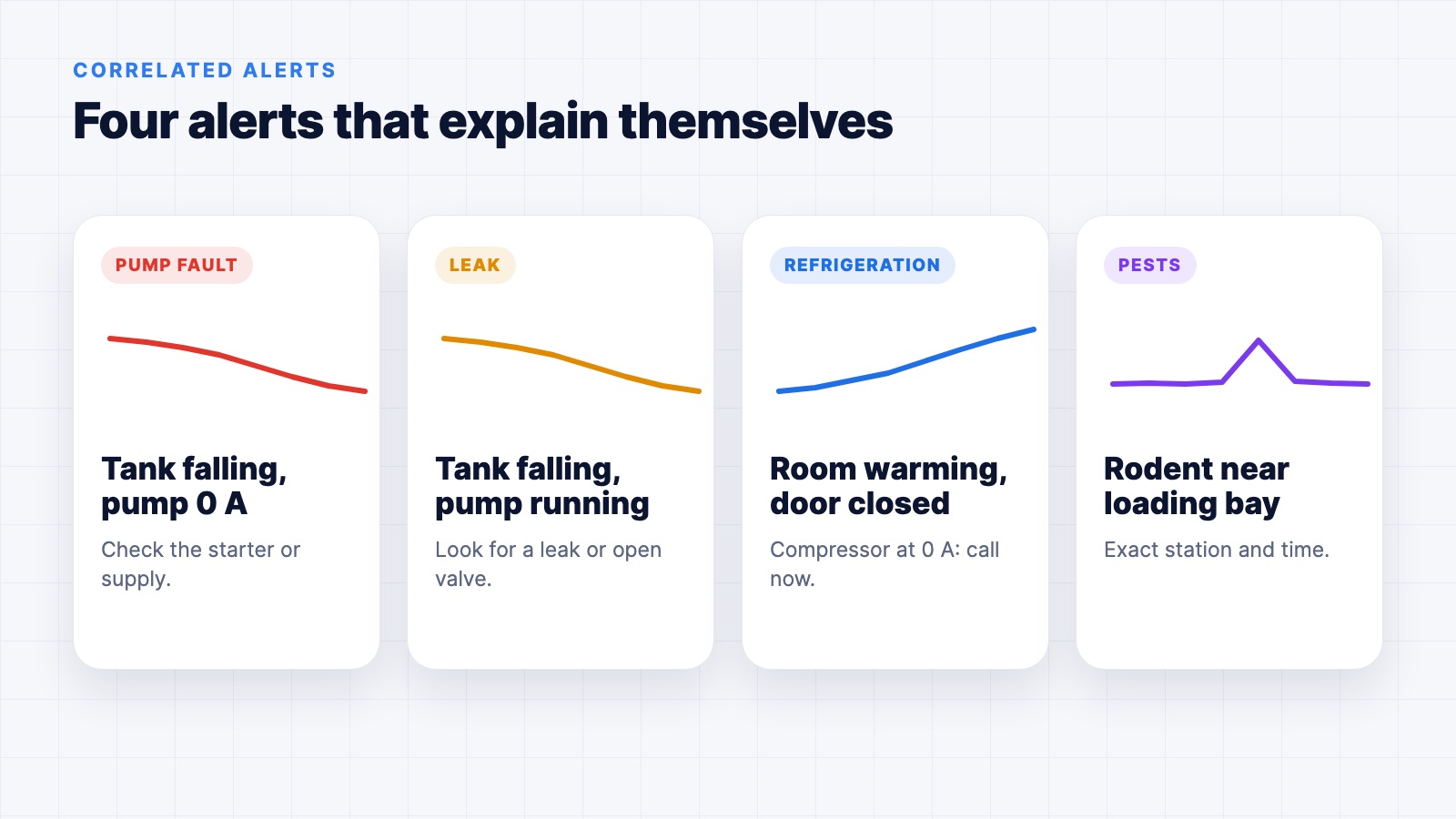
Tank level falling and pump motor at 0 A: the pump has stopped. Check the starter or supply before the tank runs dry.
Tank level falling and pump running normally: the pump is working but water is going somewhere. Look for a leak or open valve.
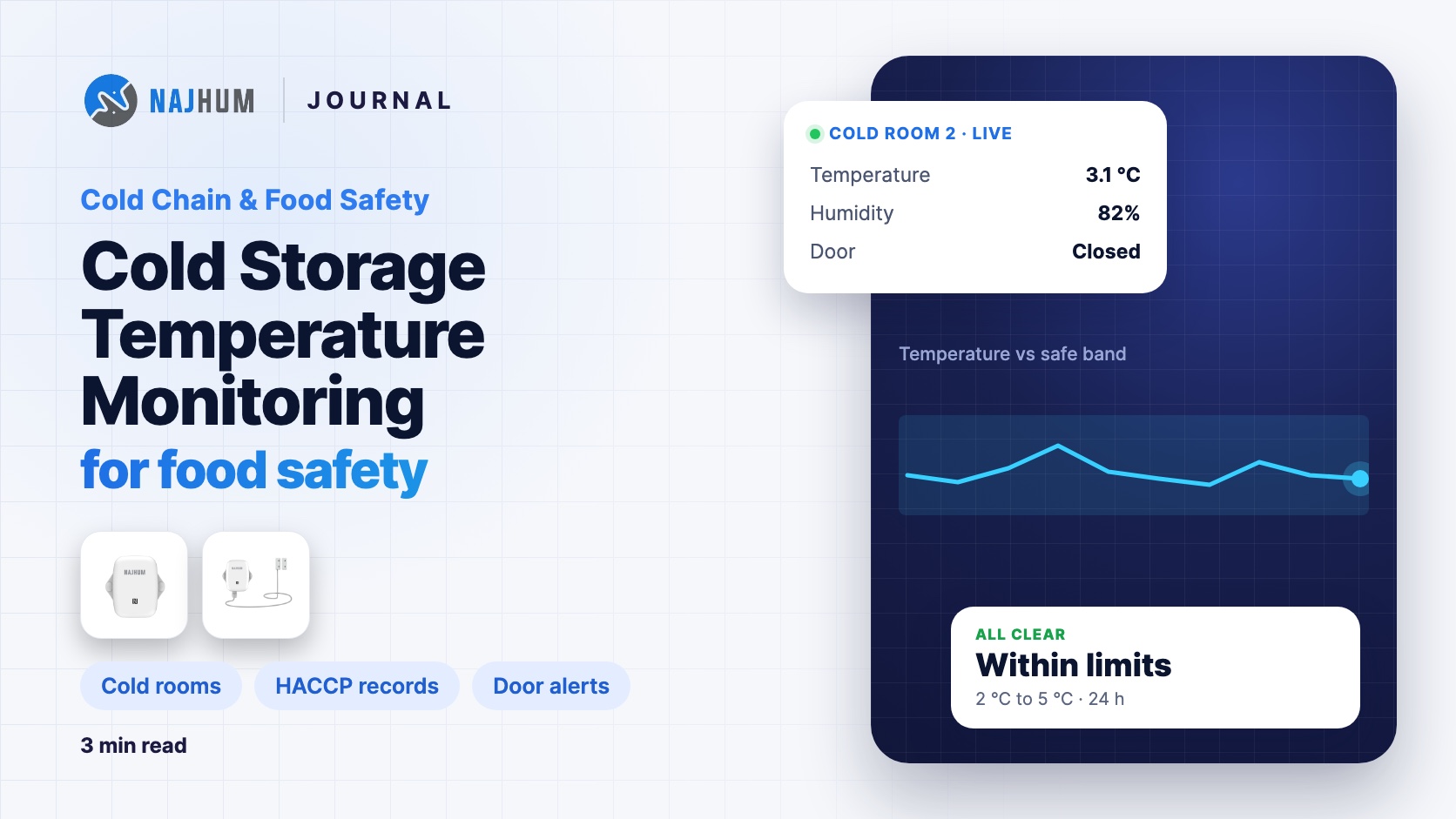
Cold room temperature rising, door closed, compressor at 0 A: refrigeration failure. Call the contractor now.
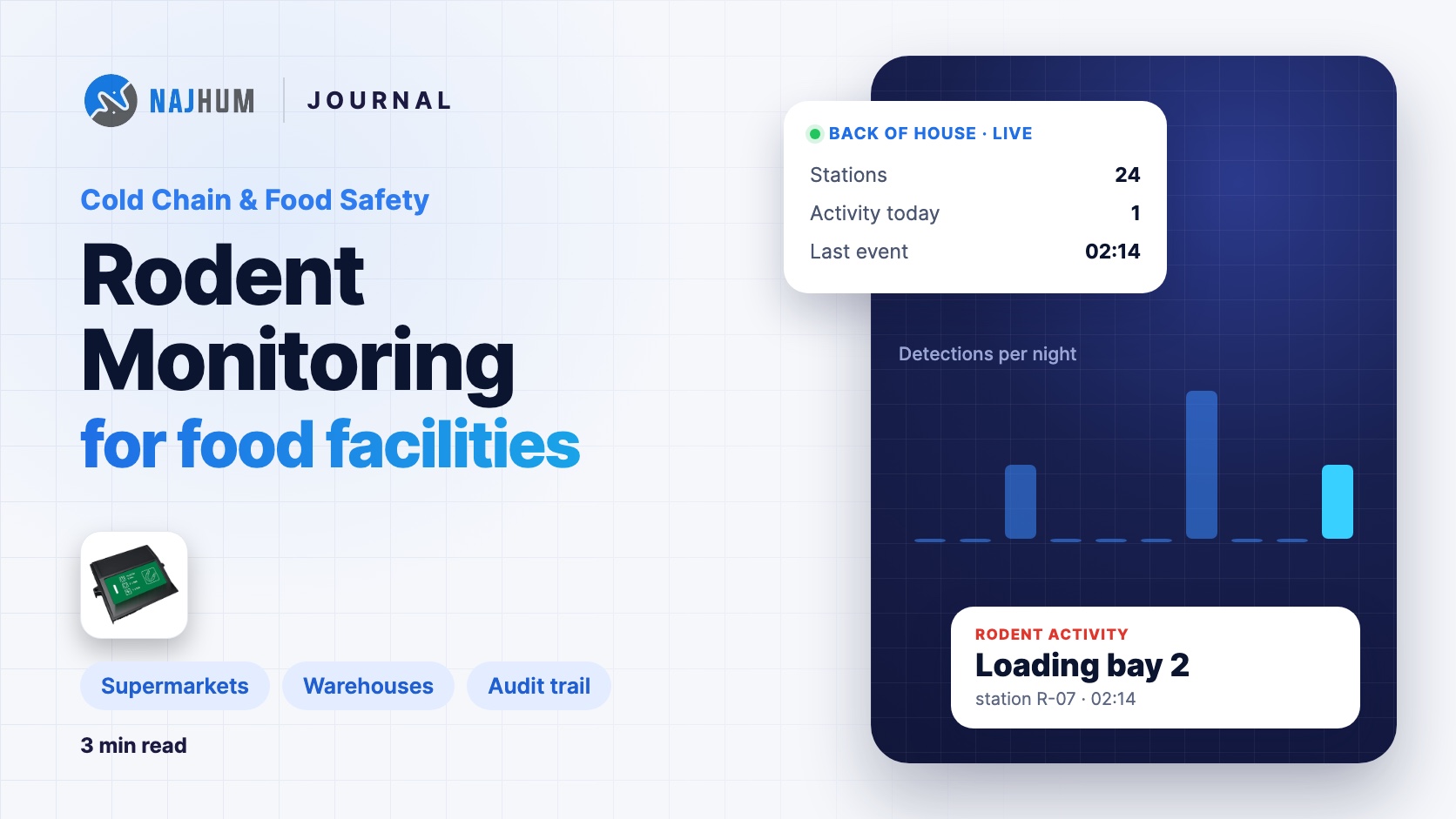
Rodent activity detected near a loading bay: notify the pest control provider with the exact location.
Each of these alerts says what happened and suggests where to look, which shortens the time between alarm and action.
Start with the systems that have failed before
Every site has a history. Ask the facilities team which incidents caused the most disruption in the past year. Often it is a pump failure that emptied a tank, or a drainage tank that overflowed during a busy period. Instrument those first, along with the cold rooms, and link them in the platform.
Keep the scope on the site
Site systems are a different problem from in-transit temperature. Focusing on the facility itself, its rooms, water, power and pests, gives the operations team a clear picture of the place they control every day.
Frequently asked questions
Is this the same as in-transit temperature monitoring?
No. This focuses on the facility itself: rooms, water, power, drainage and pests.
Do we need to replace existing alarms?
No. Wireless sensors can be added alongside existing systems and combined on one platform.
Where should we start?
With the incidents that caused the most disruption last year, plus the cold rooms.
See your whole cold chain site in one view.
Our cold chain solution is built around this idea. Book a demo to see a correlated alert from detection to resolution.