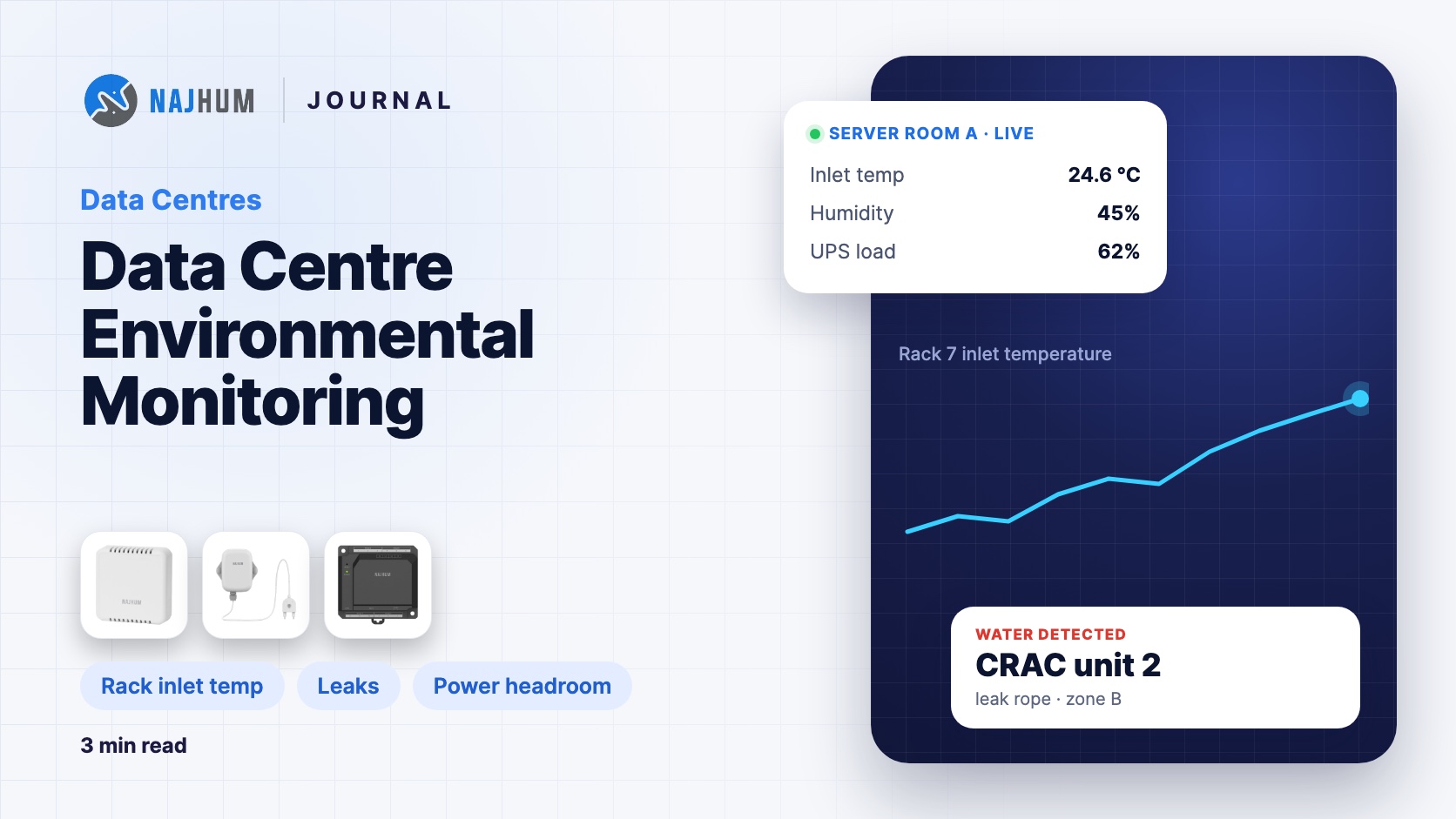
IT teams track servers, storage and network equipment in detail. The room those systems live in often gets far less attention. Yet many outages begin with the physical environment: a cooling unit that stops, a leak under a raised floor, a door left open or a circuit approaching its limit.
Environmental monitoring gives facilities and IT teams the same early warning for the room that they already have for the equipment.
Key takeaways
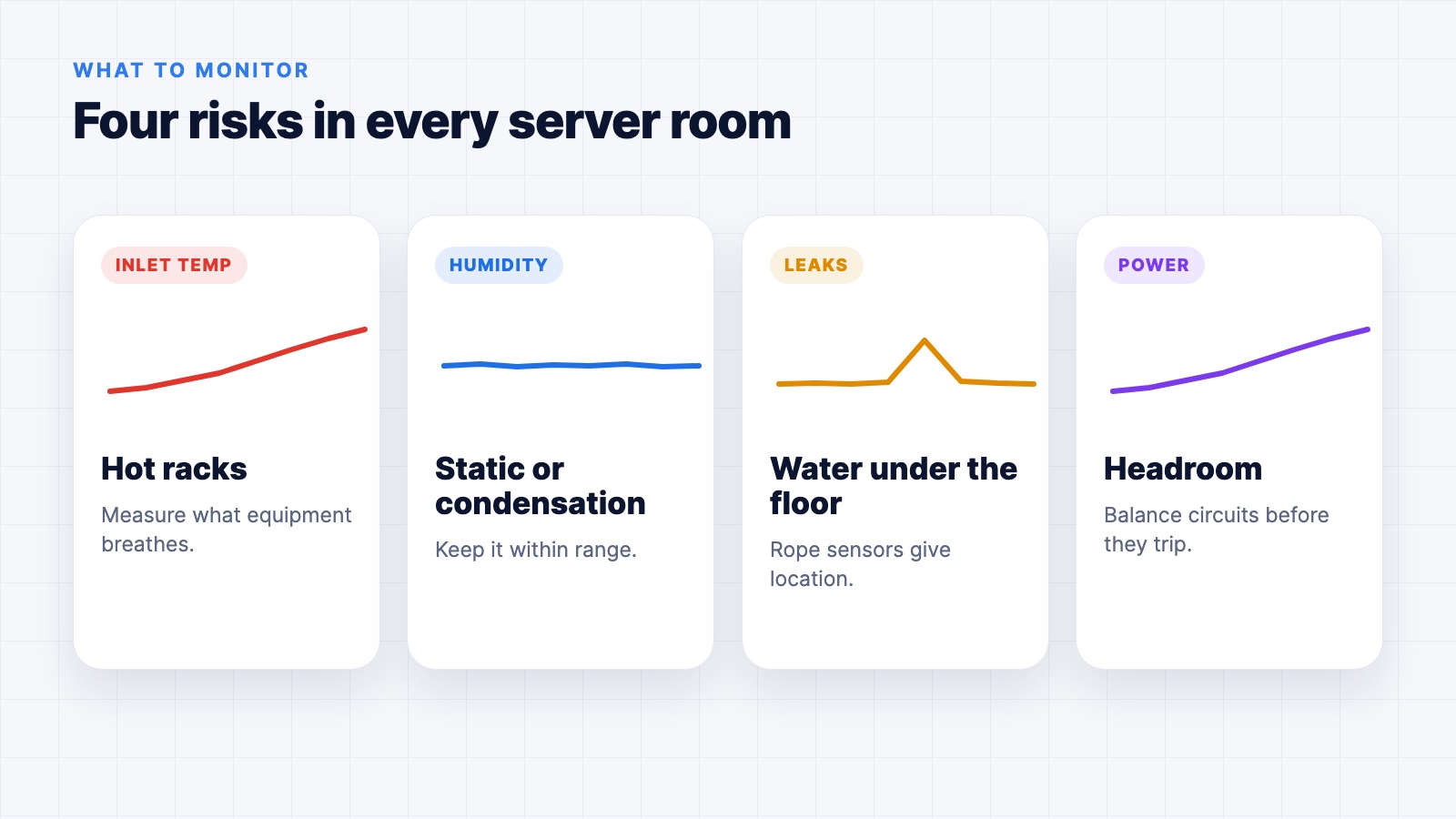
Measure at rack inlets, not only the room average.
Humidity matters in the UAE's hot, humid climate.
Leak ropes under raised floors give an exact location.
Power metering shows headroom before a circuit trips.
Measure at the rack, not just the room
A room thermostat can read a comfortable average while the top of one rack runs hot. Sensors at the cold-aisle inlet of key racks show what the equipment is actually breathing. Industry guidance, such as the ASHRAE thermal guidelines widely used in data centres, is based on inlet conditions, which is a good reason to measure there.
Humidity is not optional
Very low humidity increases the risk of static discharge; very high humidity can lead to condensation on cold surfaces. In the UAE, where outside air is often hot and humid, a fault in the cooling or air handling system can quickly change conditions inside. Humidity sensors alongside temperature give a complete picture.
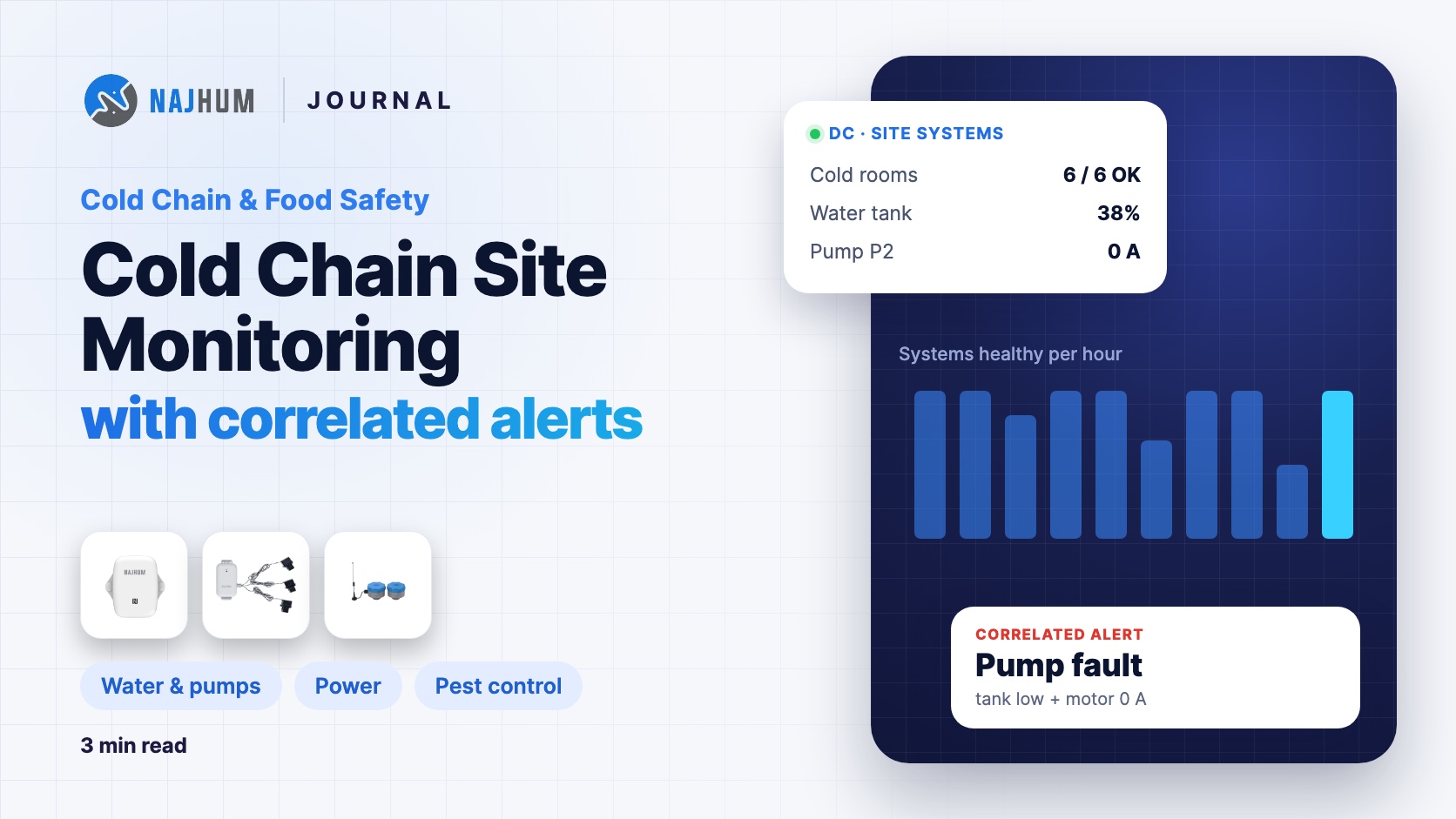
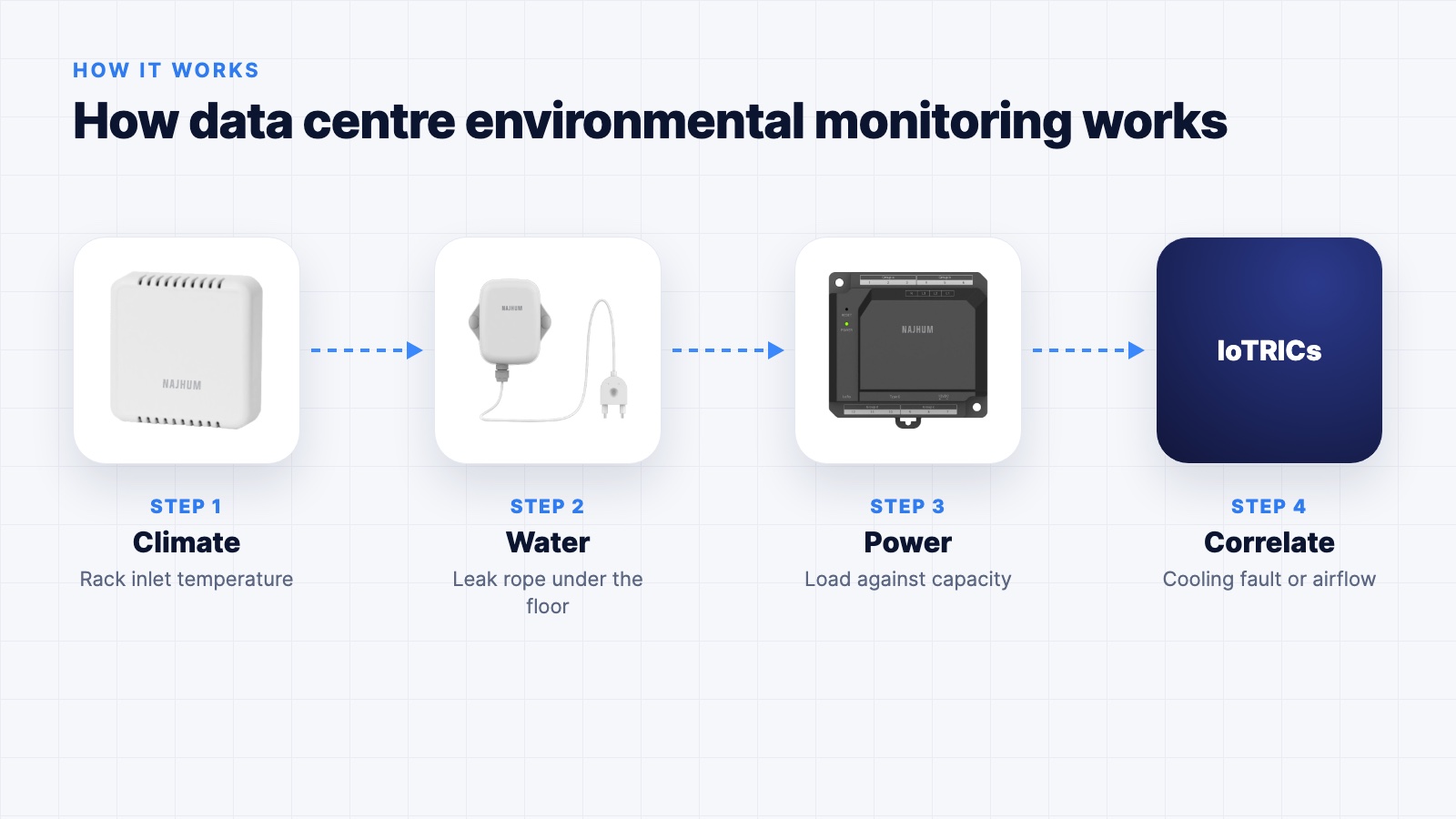
Rising inlet temperature plus a cooling unit at 0 A is a unit failure, not an airflow problem.
Water leaks under the floor
Cooling units, chilled water pipes and condensate drains bring water into the room. Rope-style leak sensors laid around cooling units and under pipe runs detect water along their full length, while spot sensors cover drains and low points. A leak alert with an exact location saves time when the floor tiles have to come up.
Power: know your headroom
Power meters on distribution boards and key circuits show real consumption against capacity. Rising load warns that a circuit needs balancing before a new deployment trips it. Monitoring also supports efficiency reporting, such as estimating PUE when combined with IT load.
Doors and access
Door sensors on the room and on rack cabinets record when they open. A cold-aisle door left open can disrupt airflow; an unexpected opening out of hours may be a security concern.
Correlate before you escalate
The value of having all these readings on one platform is context. A rising inlet temperature together with a cooling unit drawing no current points to a unit failure. The same temperature rise with the cooling unit running normally and a door open points to airflow. IoTRICs combines these readings into alerts that explain the likely cause, so the right team responds first.
Wireless sensors in live rooms
Battery-powered wireless sensors can be installed without shutting down equipment or running new cables through containment. That makes it practical to add monitoring to existing rooms, including smaller server rooms and edge sites that have never had it.
Frequently asked questions
Can sensors be added to a live room?
Yes. Battery-powered wireless sensors install without shutdowns or new cabling through containment.
Where should temperature be measured?
At the cold-aisle inlet of key racks, which is what thermal guidance is based on.
Does this work for small server rooms?
Yes. It makes monitoring practical for smaller rooms and edge sites that never had it.
Protect your server rooms from the floor up.
See our data centre IoT solution, or discuss your project with our team.