An electricity bill tells you what a site consumed over a billing period. It may not explain which operating patterns contributed to that result. Energy monitoring is a way to ask more precise questions, provided the readings are connected to useful boundaries and reviewed by people who can act on them.
Before choosing a dashboard or announcing a reduction target, define what you want to understand. You might want to investigate after-hours operation, compare similar production periods, or separate a major equipment group from the rest of the site.
Choose the boundary of the question
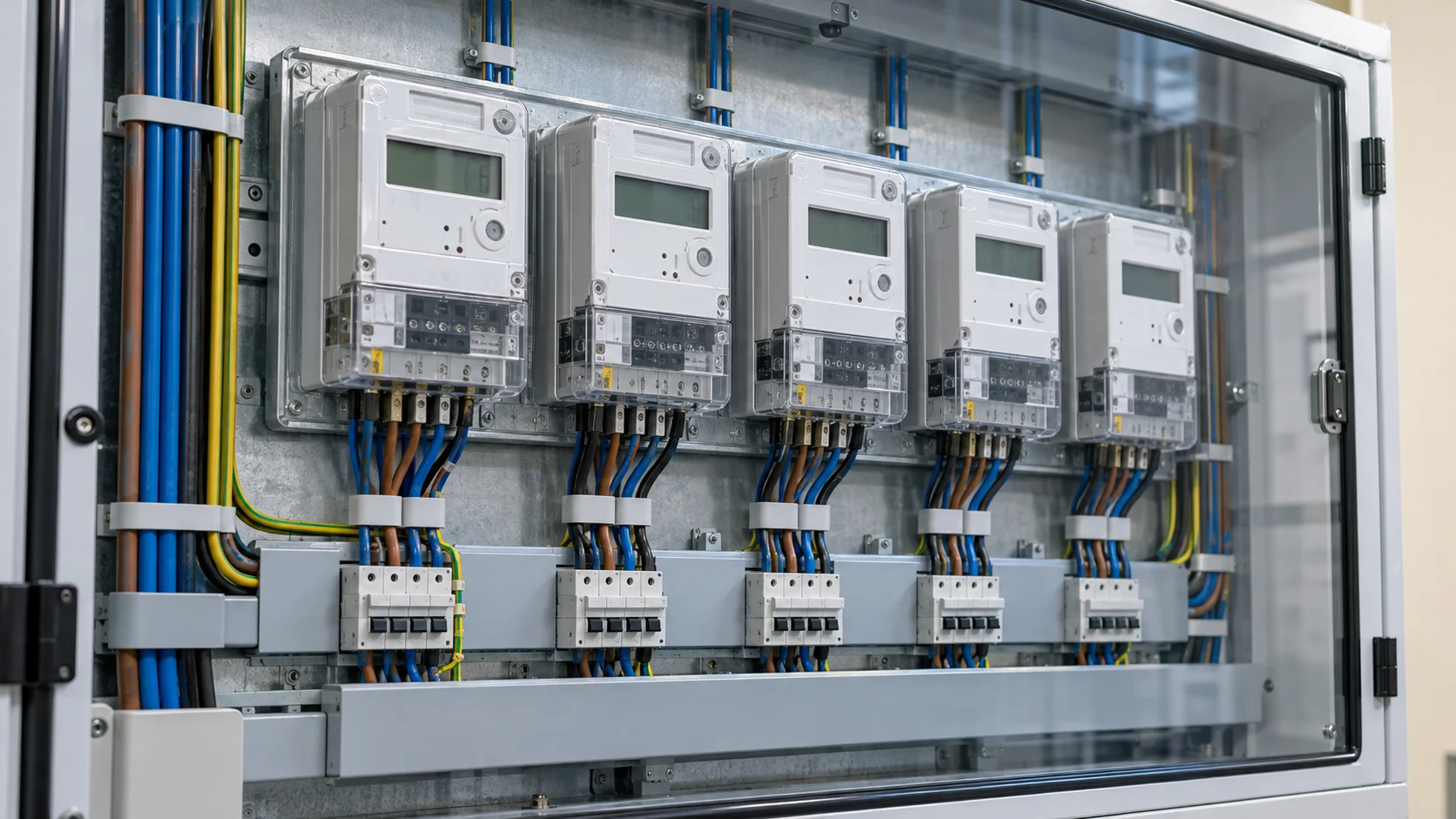
Building-level, distribution-level, and end-use metering answer different questions. The U.S. Department of Energy’s metering guidance discusses these levels and the importance of a planned metering programme. A site-wide reading gives an overall picture; a more specific measurement can support investigation of an individual area or system.
Start with a diagram of the electrical distribution and label the boundaries you can measure reliably. Decide which questions can be answered with existing data before specifying additional meters. Have electrical work assessed and carried out by the appropriate qualified professionals.
Keep energy and demand separate
Energy use, commonly expressed in kilowatt-hours, describes electricity consumed over time. Power, commonly expressed in kilowatts, describes the rate of use. Billing demand can depend on the utility’s measurement interval and tariff rules, so confirm those details before interpreting a peak on a dashboard as a billing event.
Use clear labels and retain the measurement interval with the data. A monthly total and a short-interval reading should not appear as interchangeable indicators.
Build a baseline with operating context
Select an initial review period and record the conditions that matter to the site. These might include opening hours, occupied area, production activity, or unusual shutdowns. Keep notes on changes that would affect a comparison.
For example, a lower weekly energy total may reflect fewer operating hours rather than an efficiency improvement. A useful review asks what changed in the operation as well as what changed in the meter reading. Where a formal savings claim is required, agree on a suitable measurement and verification method with the responsible specialists.

Investigate one pattern at a time
Choose an observation that the team can investigate without disrupting the site. Look at whether an equipment group follows its intended schedule or whether an unexpected overnight load has an identifiable cause. Treat the pattern as an investigation prompt, not as a diagnosis.
- Confirm that timestamps and meter labels are correct.
- Check for missing intervals and changes in data collection.
- Record the proposed operational change and who approved it.
- Compare the result over a suitable period with relevant operating conditions noted.
Make the review a recurring responsibility
A meter does not produce a better operating outcome by itself. Give a named team responsibility for reviewing trends, recording actions, and checking whether the monitoring system remains reliable.
Use the first monitoring phase to build a repeatable review process. Expand the metering plan when additional measurements will answer a defined question, rather than simply adding more charts.
Explore the IoTRICs platform or discuss an energy-monitoring plan with Najhum.
Further reading
U.S. Department of Energy: Metering in Federal Buildings. This is a technical reference; its U.S. federal requirements are not presented as UAE requirements.