
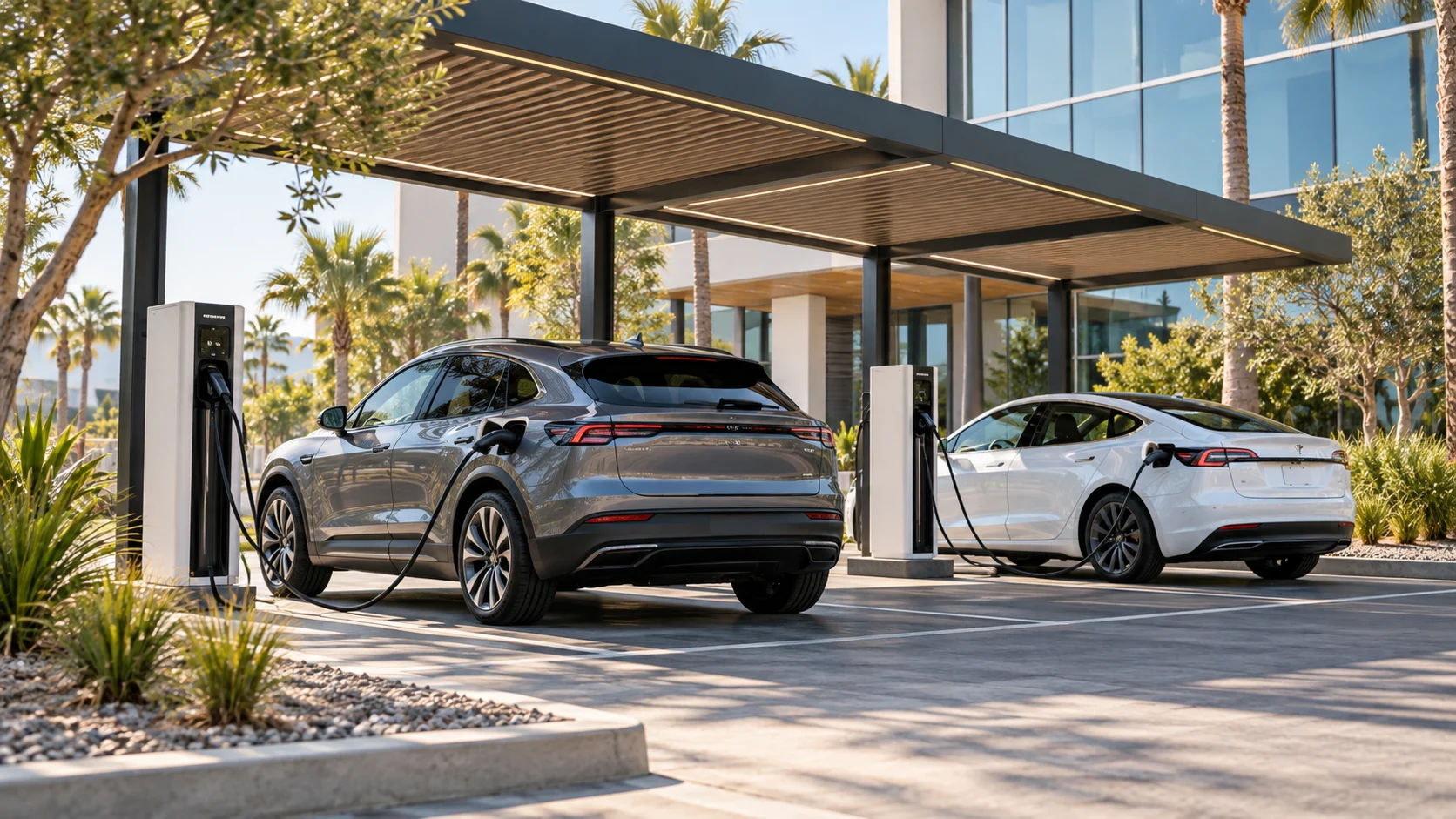
A charger is one visible part of an EV charging service. The experience also depends on where drivers park, how long they stay, whether charging can start successfully, and who resolves an issue when it cannot.
Planning should therefore begin with the people and operating conditions at the site. The goal is to choose an appropriate system and support process, rather than treating the number of installed chargers as the only measure of readiness.
Define who will charge and when
A workplace, hotel, residential development, and fleet depot can have very different priorities. Describe the expected users, the time they usually spend on site, and how charging spaces will be managed. Include accessibility, signage, and access arrangements in the site discussion.
For a fleet, identify departure requirements and operational constraints. For guest charging, consider how a driver will find the charger, understand the service, and ask for help. These questions should inform the requirements given to hardware and software suppliers.
Assess the electrical site before choosing scale
Have qualified electrical specialists assess the available capacity, distribution arrangements, proposed installation locations, and applicable approval requirements. Ask them to identify which assumptions need verification before the design is finalised.
Where load management is proposed, document what will be measured, how limits will be enforced, and how the system should behave if communication is interrupted. Do not assume that software removes the need for a suitable electrical design or local approvals.
Check compatibility as a complete system
The Open Charge Alliance maintains OCPP, a protocol used for communication between charging stations and charging-management systems. Protocol versions and supported functions differ. Specifying OCPP is a useful starting point, but a version label alone does not prove that every required function will work across a chosen combination of equipment and software.
Prepare acceptance tests around your intended operation. Ask suppliers to demonstrate the required start and stop flows, session records, fault reporting, and any selected smart-charging functions using the proposed configuration.
Make day-to-day ownership explicit
Write down who is responsible for the charging service. This may involve the site owner, facilities team, software operator, installation contractor, and maintenance provider. Avoid leaving a gap between the person who receives a fault notification and the person authorised to resolve it.
- Define how drivers report a problem and receive assistance.
- Assign responsibility for checking faults and connectivity.
- Agree on access for inspection and maintenance.
- Decide how service information and operational records will be reviewed.
Commission the driver journey
Test the experience from arrival through the end of a session. Check signs, instructions, access steps, charging initiation, and the information shown to the driver. Include a controlled failure scenario so the support process is tested alongside the normal experience.
Review a pilot period before expanding. Use the observations to refine the design, the management workflow, and the responsibilities of each service provider.
Explore EVOLTICS or talk to Najhum about your charging project.