In hot, dry climates, irrigation is the biggest daily decision on most farms. Water too little and crops suffer heat stress; water too much and you waste a scarce resource, leach nutrients and raise salinity. Weather is the main driver of how much water crops need, yet many farms rely on regional forecasts that may be tens of kilometres away.
Key takeaways
Regional forecasts can be far from your plots.
An on-farm station measures temperature, humidity, wind, radiation and rain.
Together they estimate evapotranspiration (ET).
Heat and wind alerts help time irrigation and spraying.
Why local data matters
Conditions on a farm can differ significantly from the nearest official station. Coastal humidity, desert winds, shade from windbreaks and greenhouse microclimates all affect how quickly plants lose water. A weather station on the farm measures what your crops actually experience.
What a farm weather station measures
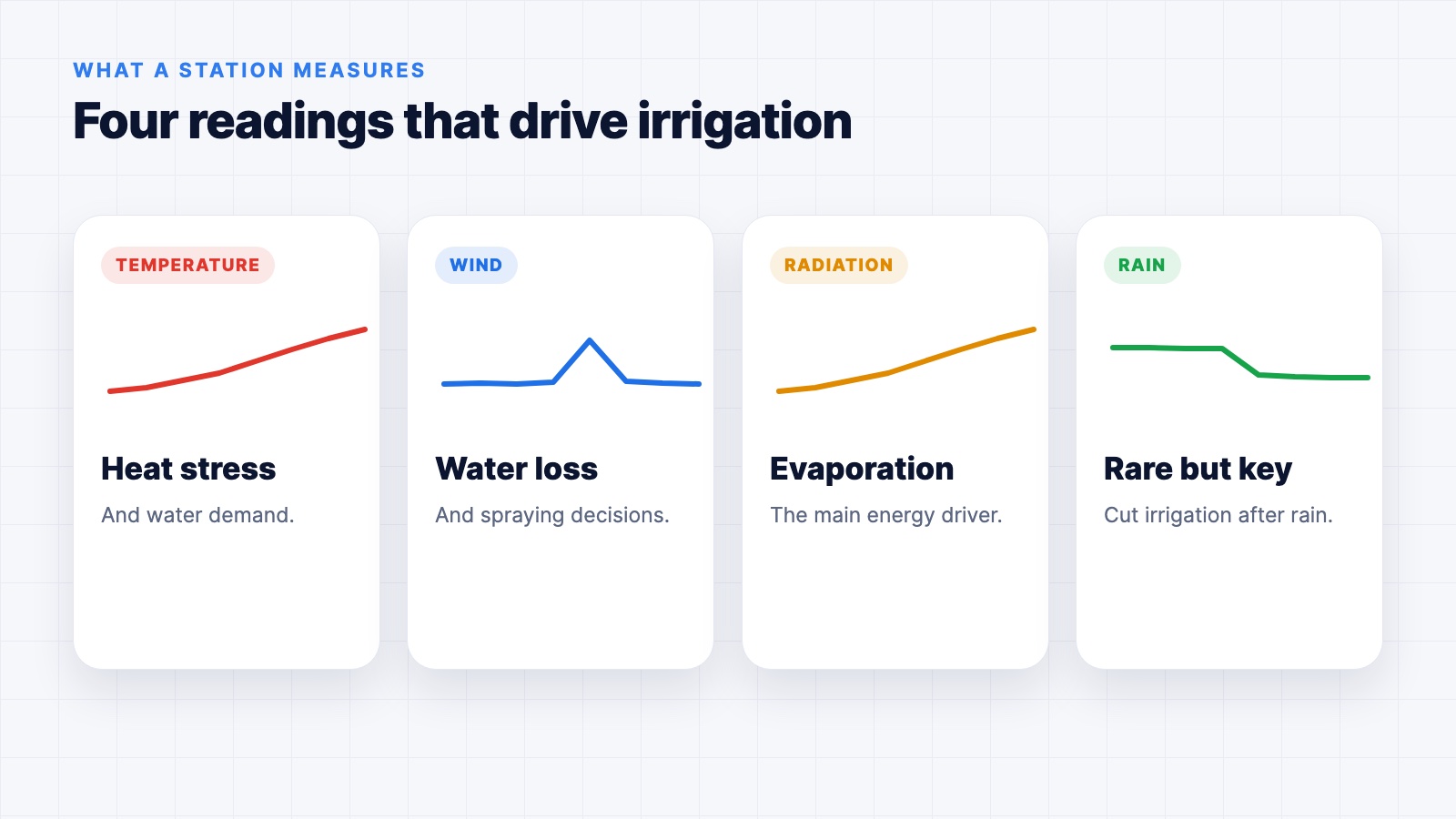
Air temperature and humidity: the basics of crop water demand and heat stress.
Wind speed and direction: wind increases water loss and affects spraying decisions.
Solar radiation: the main energy driving evaporation.
Rainfall: rare but important, so irrigation can be reduced after rain.
Barometric pressure: useful for anticipating weather changes.
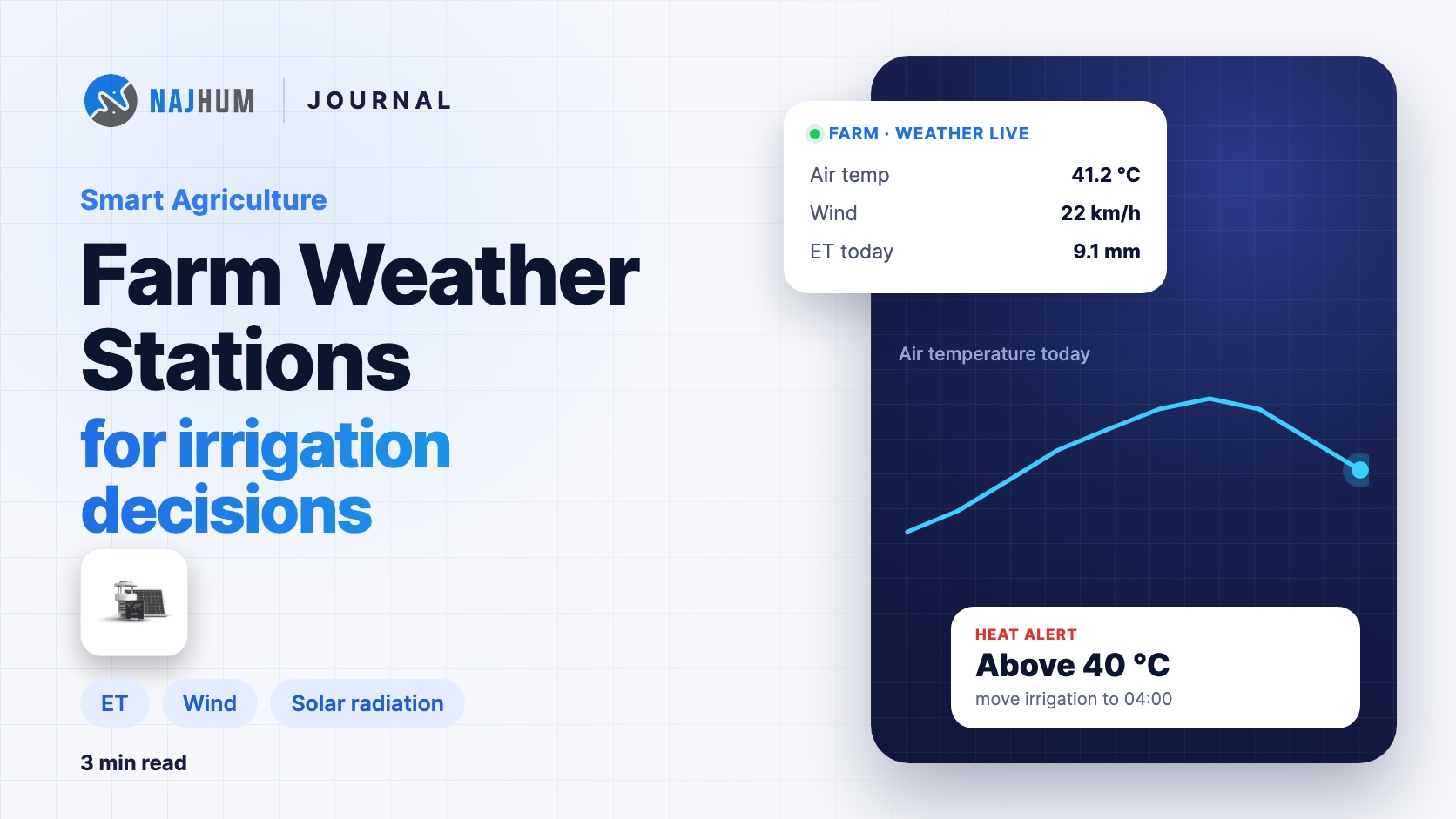
Above 40 °C by noon: move irrigation to 04:00 and close the greenhouse vents.
From weather to water demand
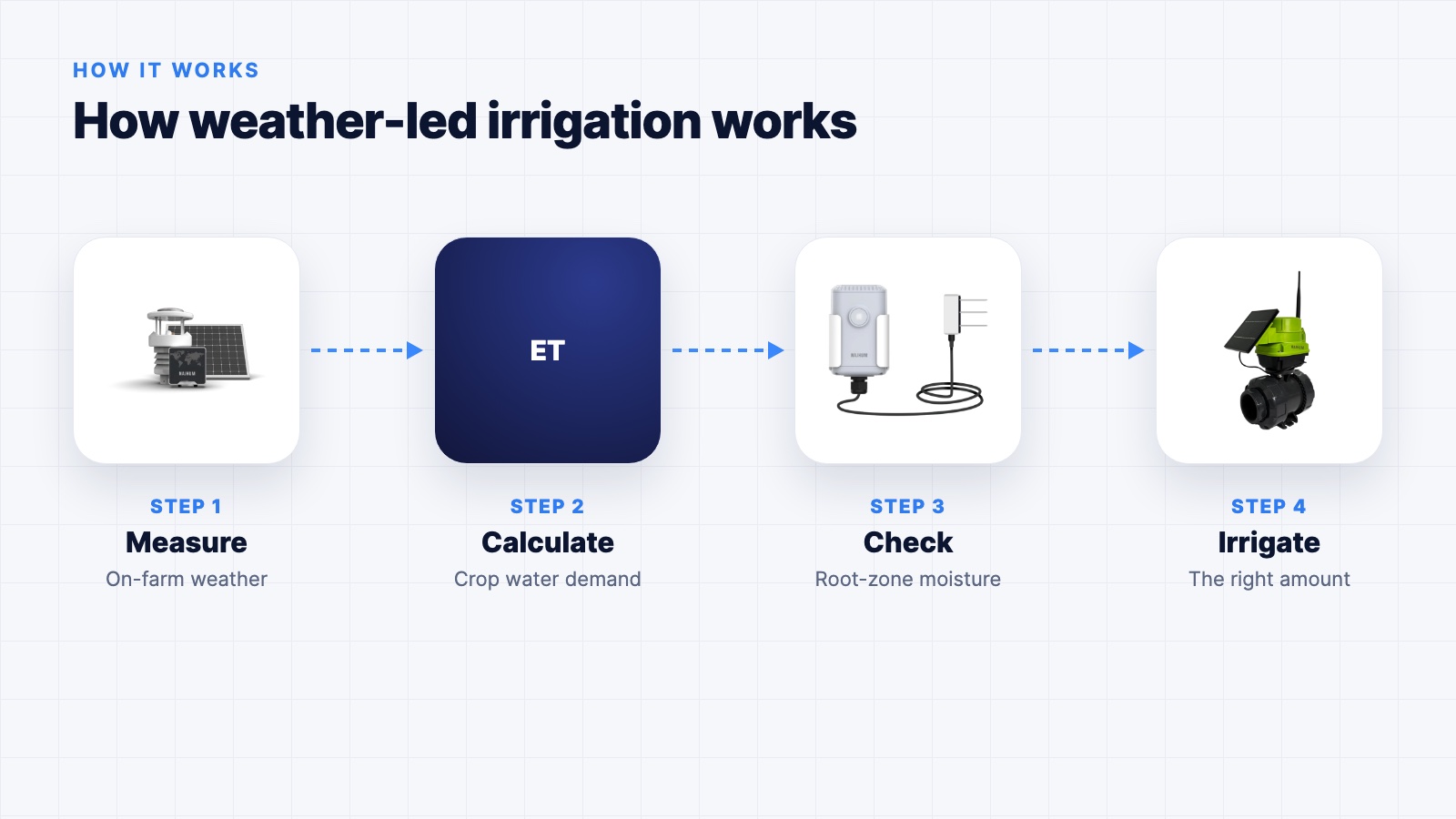
These measurements together allow the calculation of evapotranspiration (ET), an estimate of how much water is lost from soil and plants. Adjusted for crop type and growth stage, ET gives a practical target for how much water to apply. Combined with soil moisture readings, it shows whether the root zone is getting what the crop needs.
Heat and wind alerts
During extreme heat or strong winds, crops can stress quickly. Alerts on temperature or wind thresholds let the farm team adjust irrigation timing, close greenhouse vents or delay spraying.
Building a record over seasons
A season-by-season history of on-farm weather helps growers compare yields with conditions, plan planting dates and understand which plots behave differently.
Part of a site-specific system
A weather station is most useful alongside soil sensors, water quality probes and valve controllers chosen for the specific farm. cropifAI brings these together in a web dashboard that farm managers can open in any browser.
Frequently asked questions
What is evapotranspiration?
An estimate of water lost from soil and plants, used to set how much to irrigate.
Why not use the nearest official station?
Conditions on a farm can differ a lot because of coast, desert winds and shade.
Does the station work alone?
It is most useful with soil sensors and valve controllers chosen for the farm.
Irrigate on your farm's own weather.
Learn more about cropifAI, or discuss your farm with Najhum.