A university campus is a small city: lecture halls, laboratories, libraries, accommodation, sports facilities, car parks and plant rooms, each with its own schedule and requirements. Facilities teams have to keep all of it comfortable, safe and efficient, often with buildings of very different ages.
Key takeaways
Timetables show bookings; sensors show real use.
Classroom CO₂ rises fast with occupancy.
Lab freezers need alerts to researchers and facilities.
Shared equipment is easier to find with Bluetooth tags.
Space utilisation: are rooms really used?
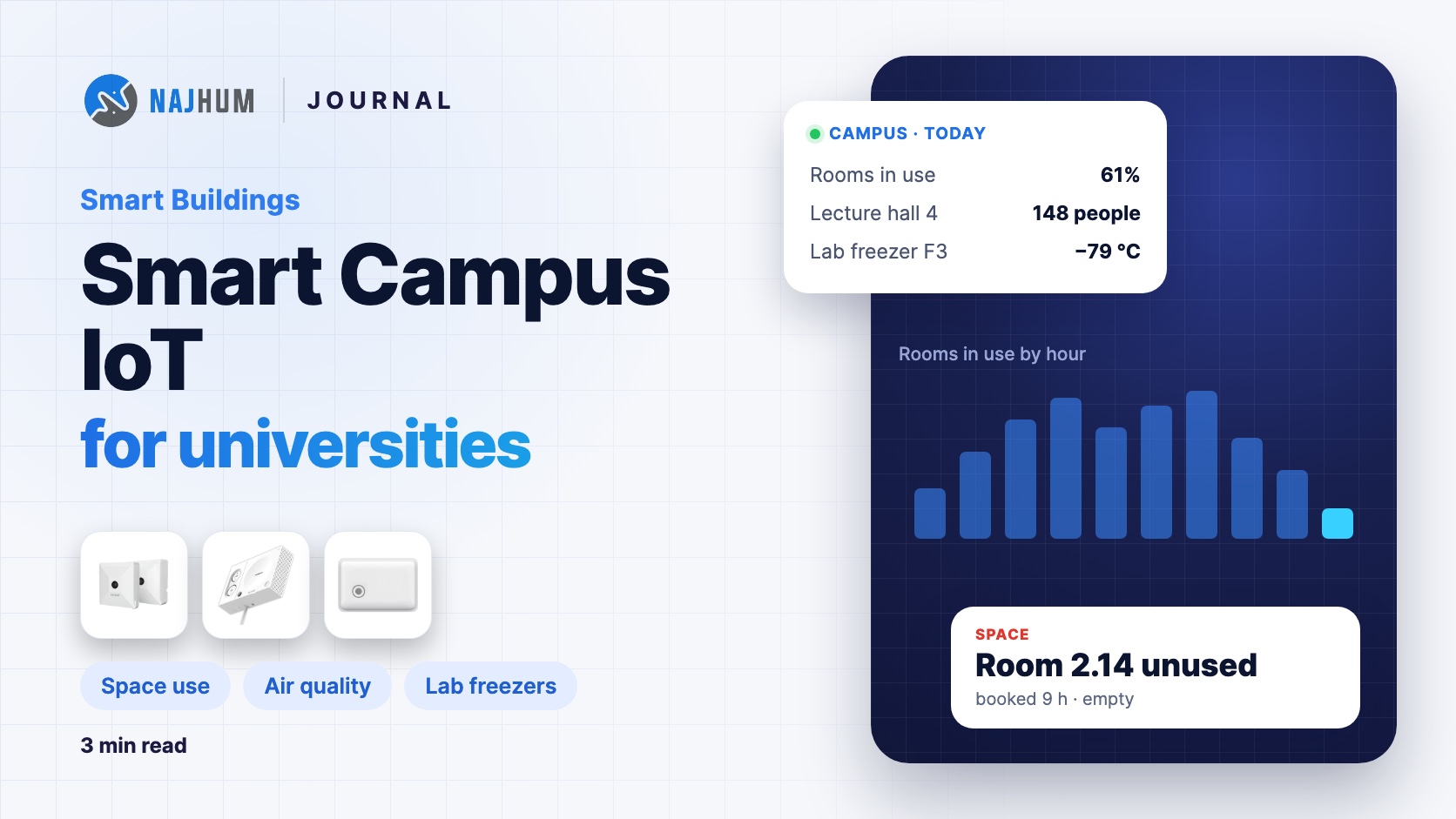
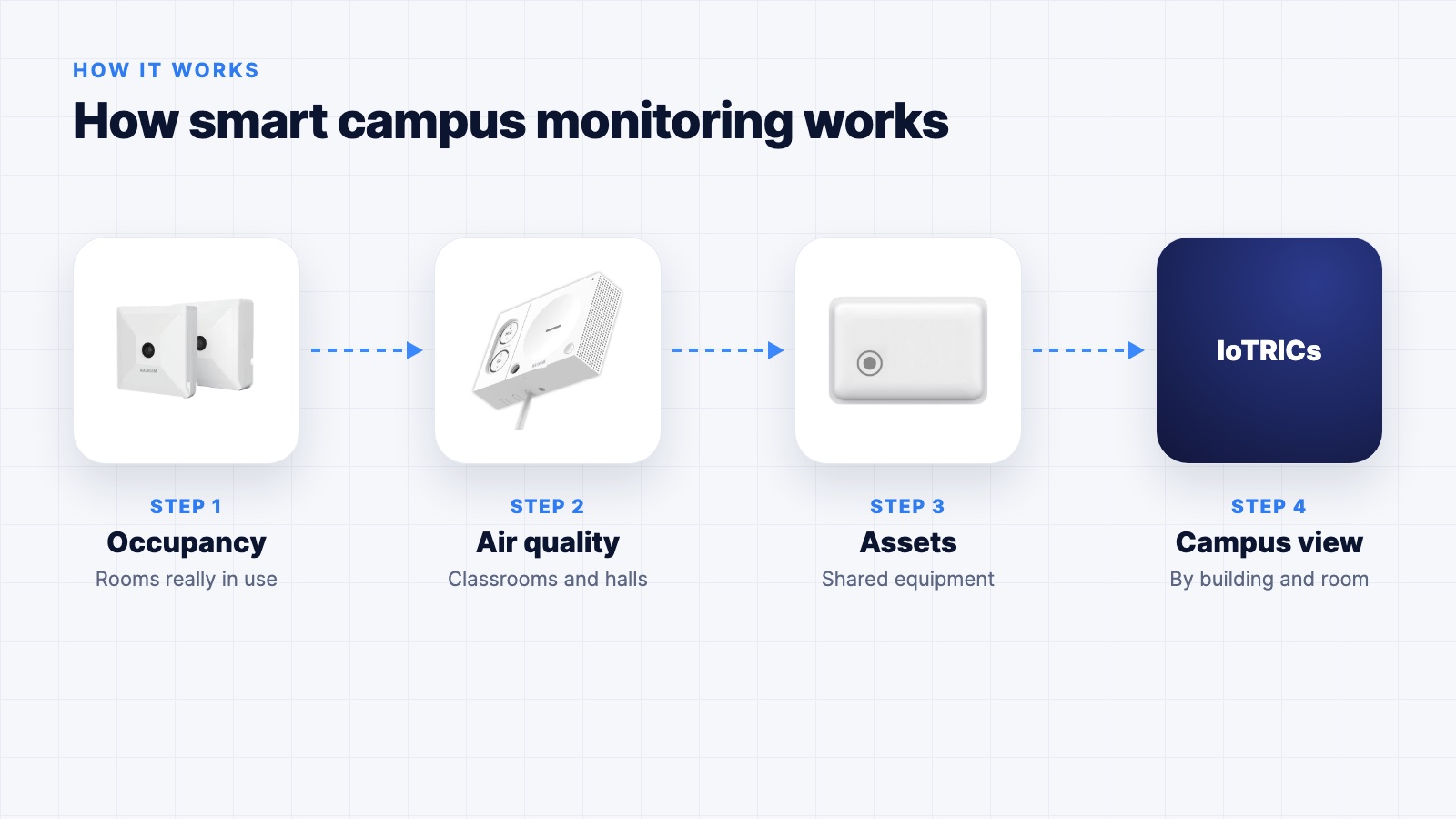
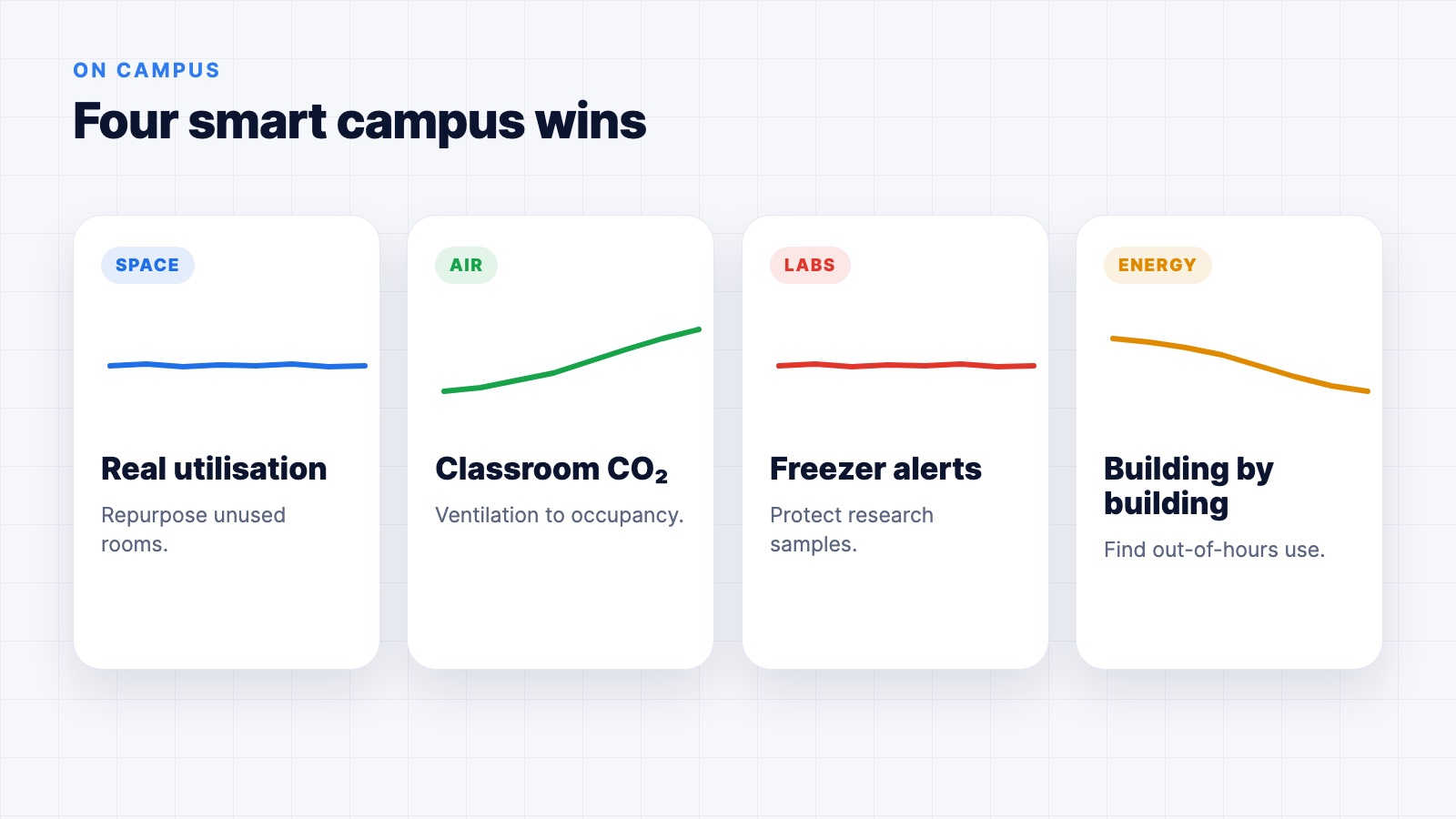
Timetables show when rooms are booked, not whether they are used. Occupancy sensors and people counters show actual use. Many institutions discover that some rooms are rarely used while others are overcrowded. This data supports better timetabling, informs decisions about new buildings and identifies spaces that can be repurposed.
Classroom air quality
Lecture rooms fill quickly, and CO₂ rises with them. Monitoring air quality helps ventilation keep pace with occupancy and gives evidence when students or staff report stuffy rooms. Combining air quality with occupancy also allows ventilation and cooling to scale down in empty rooms.
Booked for 9 hours, empty all day. Space data changes timetabling conversations.
Laboratories and research assets
Labs contain freezers, incubators and specialist equipment where a temperature excursion can destroy months of research. Continuous monitoring with alerts to the responsible researcher and the facilities team protects samples and provides a documented record.
Shared equipment and asset tracking
Projectors, AV equipment, laptops, lab instruments and maintenance tools move between buildings. Bluetooth tags and location anchors help teams find them quickly and see which items are underused.
Energy across many buildings
Campuses often have dozens of buildings on separate supplies. Metering by building and system allows comparison, highlights equipment running out of hours, and supports sustainability commitments many universities have made publicly.
Student accommodation
Residences need reliable water supply, working air conditioning and quick responses to leaks. The same monitoring used in residential buildings applies here, with alerts going to the campus facilities team.
EV charging for staff and students
As electric vehicle adoption grows, campuses are adding charging in car parks. Managing that charging alongside building energy, as with our EVOLTICS platform, helps avoid overloading supplies.
Bring it together
The value of a smart campus comes from seeing these systems together. IoTRICs presents data by campus, building and room, with role-based views for facilities, research and management teams.
Frequently asked questions
Does occupancy sensing identify students?
No. Occupancy sensors and counters measure presence and counts, not identities.
Can it cover old and new buildings?
Yes. Wireless sensors suit buildings of any age on one platform.
Can research teams get their own alerts?
Yes. Role-based views send lab alerts to researchers and facilities.
Run your campus on real data.
Explore our universities solution, or book a demo for your campus.