Many IoT projects stall after the pilot. The sensors work, the dashboard looks good, but nobody owns the system long term. Batteries run flat, a gateway goes offline, alerts go to someone who has left the company. Months later, the system is quietly forgotten.
Solution-as-a-Service, or SolaaS, is designed to prevent that by making the provider responsible for the whole solution working, not just for delivering equipment.
Key takeaways
Many IoT pilots stall because nobody owns the system long term.
SolaaS makes one provider responsible for the whole solution.
It turns a large upfront purchase into a predictable fee.
PaaS suits teams that already run their own devices.
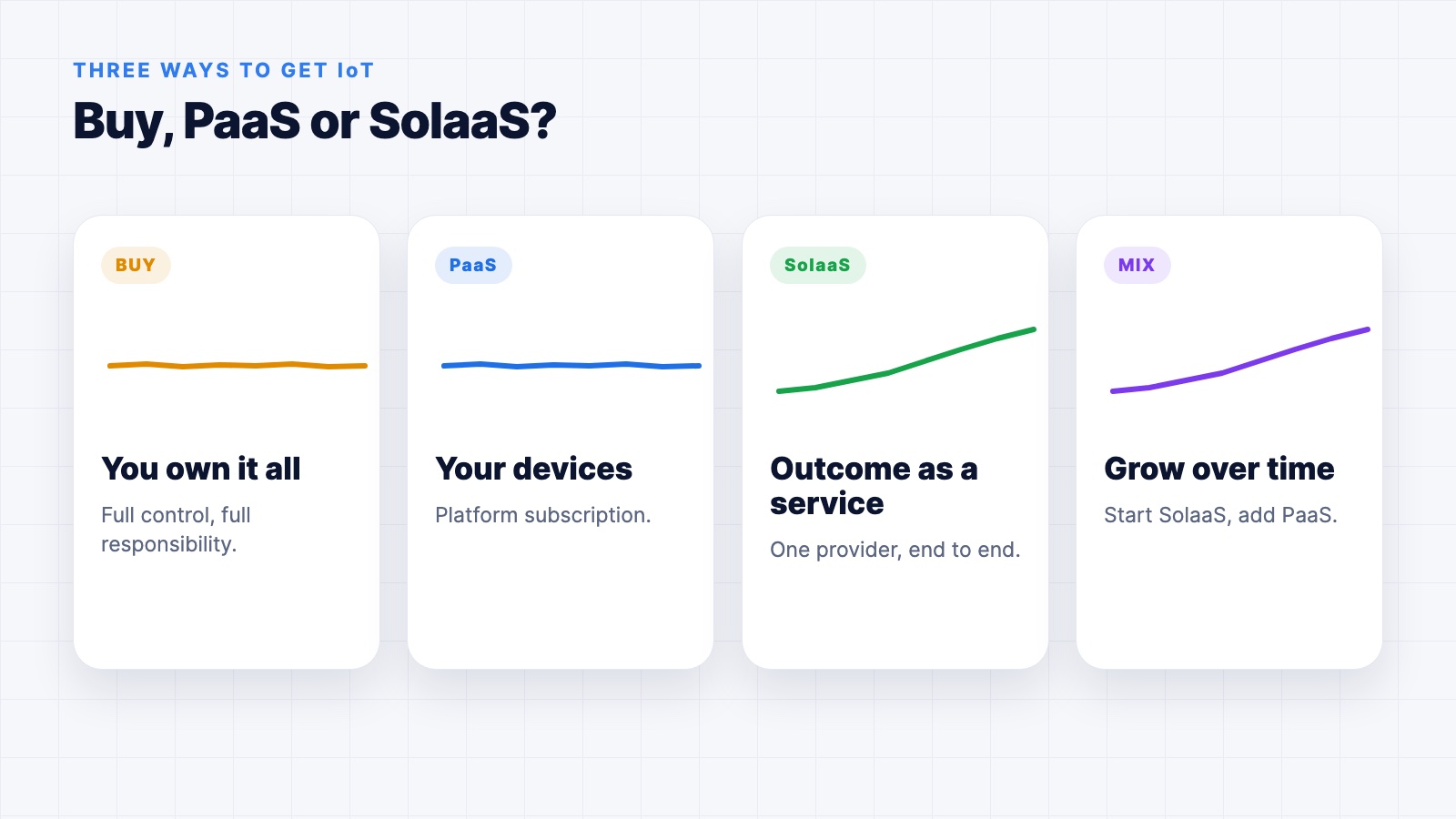
Three ways to get an IoT solution
Buy and run it yourself: you purchase the devices, install them, choose a platform and maintain everything. You have full control, and full responsibility.
Platform-as-a-Service (PaaS): you subscribe to a platform and connect your own devices. Useful for organisations with in-house IoT skills.
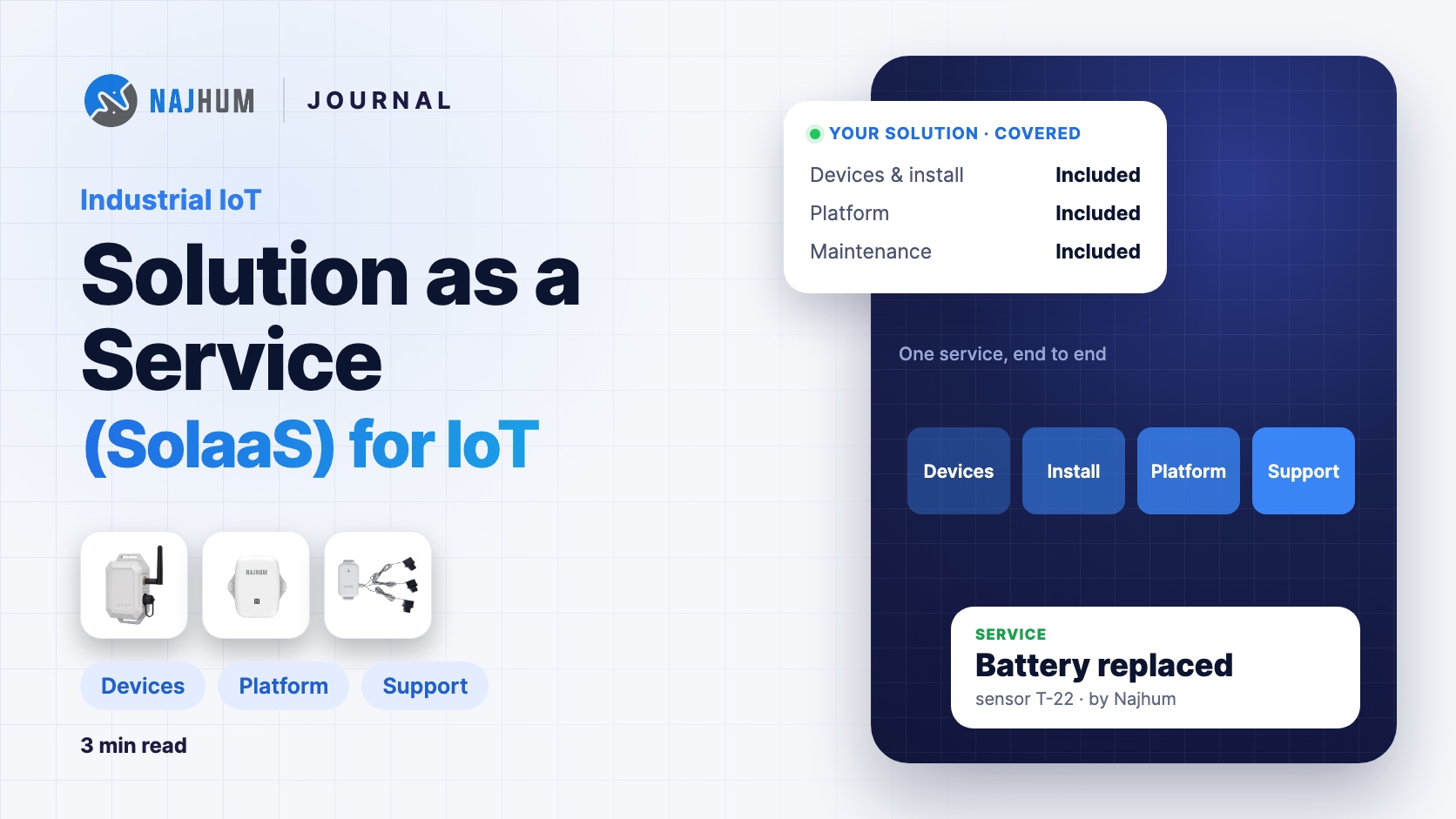
Solution-as-a-Service (SolaaS): the provider designs, installs and operates the complete solution, including devices, connectivity, platform, maintenance and support, for a recurring fee.
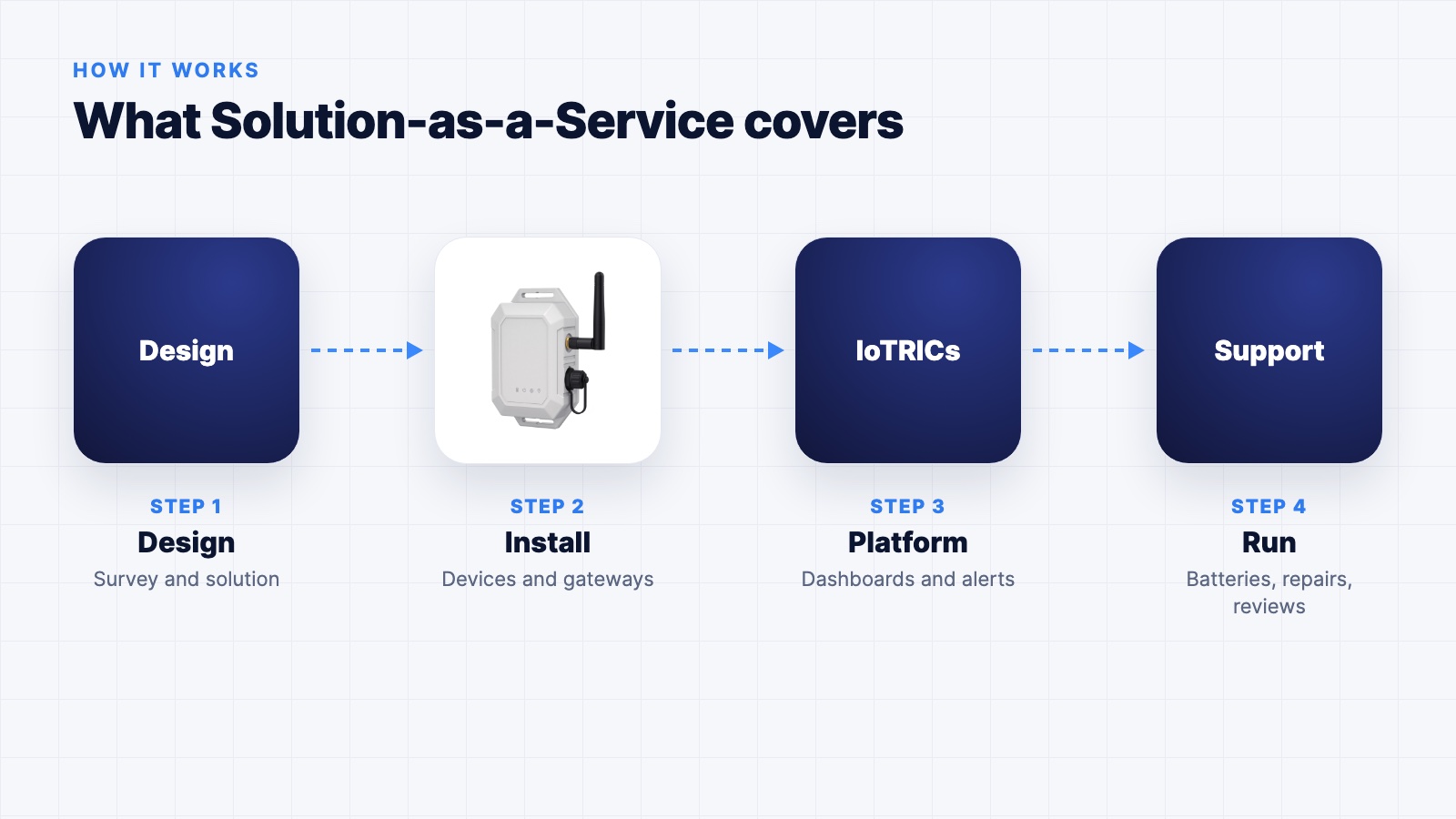
What SolaaS typically includes
Site survey and solution design for your use case
Devices and site infrastructure, installed and commissioned
Platform access with dashboards, alerts and reports
Monitoring of device health, battery replacement and repairs
Support and periodic reviews to improve alerts and coverage
Batteries run flat, gateways go offline, the alert owner leaves. SolaaS is designed to stop that.
Why organisations choose it
Predictable cost: a recurring operating expense instead of a large upfront purchase.
Clear accountability: one provider is responsible for the solution working.
Faster start: no need to build in-house IoT expertise first.
Easier scaling: add sites or use cases on the same model.
Technology refresh: devices can be updated as part of the service.
When PaaS may be a better fit
If you already have devices installed, an engineering team that manages them, or specific integration needs, a platform subscription may suit you better. Many organisations start with SolaaS for one use case and move to a mixed model as their capability grows.
Questions to ask
What service levels apply to response and repair?
Who owns the data, and can it be exported?
What happens at the end of the contract term?
How are new devices or sites added?
Frequently asked questions
Who owns the data under SolaaS?
Agree it in the contract, including export rights, before you start.
What happens at the end of the term?
Contracts set out renewal, device refresh or handover options.
Can we add sites later?
Yes. New sites and use cases are added on the same model.
Find the right model for your project.
Najhum delivers solutions primarily as SolaaS, with PaaS available on IoTRICs for teams that run their own devices. Discuss which model fits your project.