Washrooms shape how people feel about a mall, an office, an airport or a hotel. A single bad experience is remembered far longer than many clean visits. Most cleaning teams still work on fixed rounds, visiting every washroom at set intervals regardless of how busy it has been.
Key takeaways
Fixed cleaning rounds miss the busiest washrooms at peak times.
Odour, footfall and bin sensors show real conditions.
Readings become tasks for the nearest cleaner.
Sensors measure air, counts and levels, never images.
The problem with fixed schedules
Usage is uneven. A washroom near a food court may see ten times the traffic of one on a quiet floor, and peaks follow events, prayer times, flight schedules and weekends. Fixed rounds over-clean quiet facilities and under-clean busy ones exactly when it matters.
What smart washroom monitoring measures
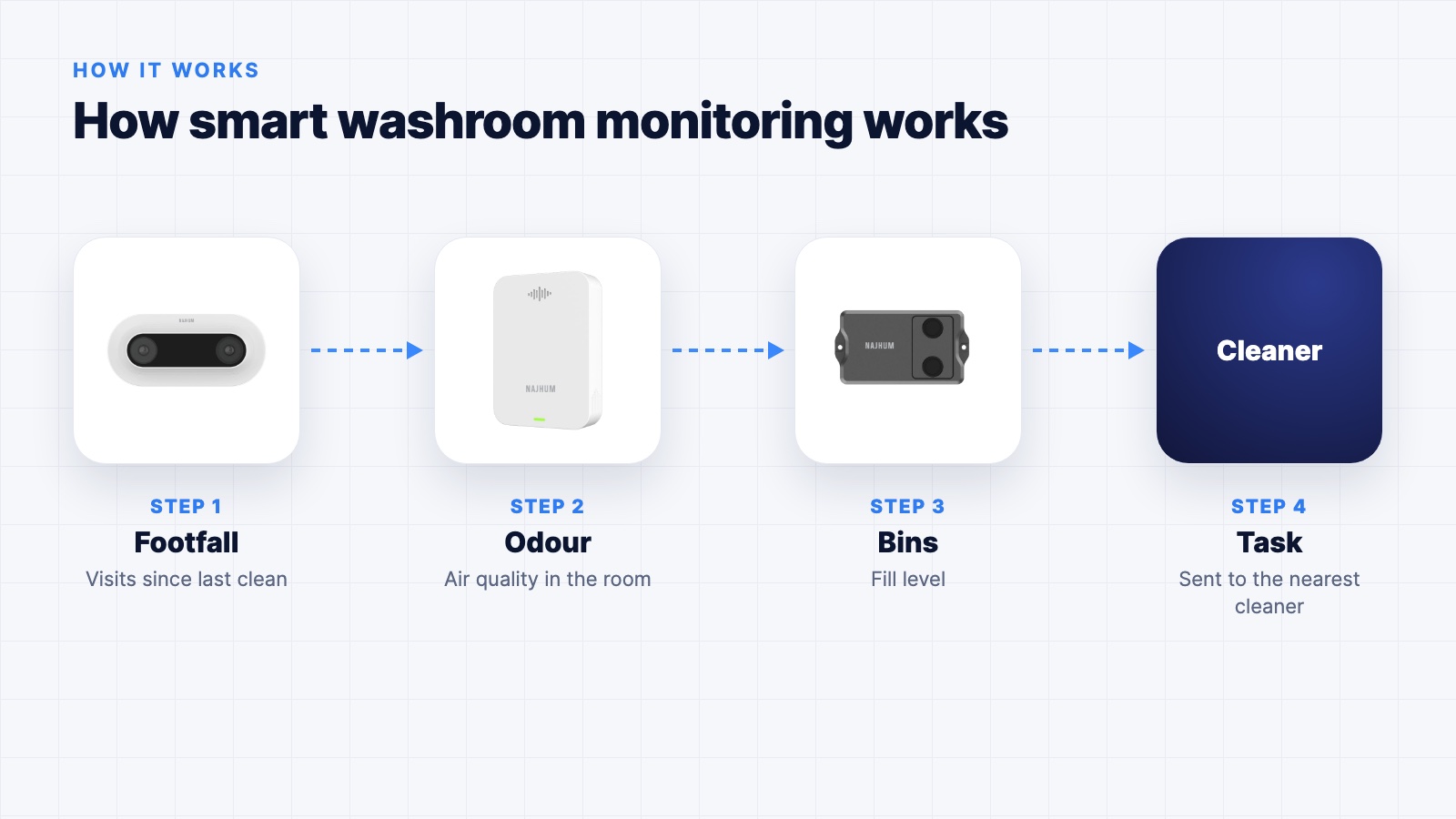
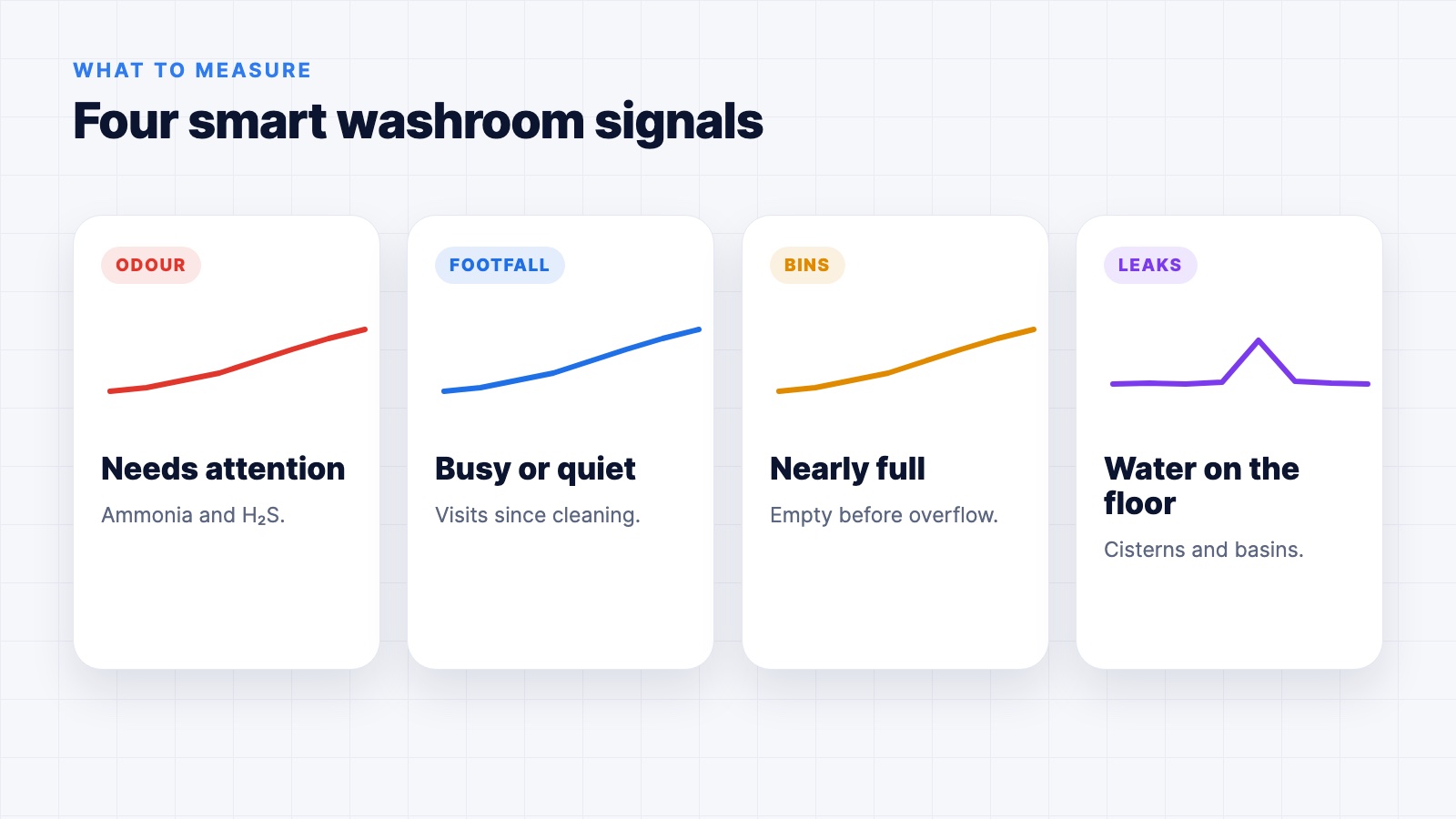
Odour: sensors detect gases such as ammonia and hydrogen sulphide that indicate a washroom needs attention.
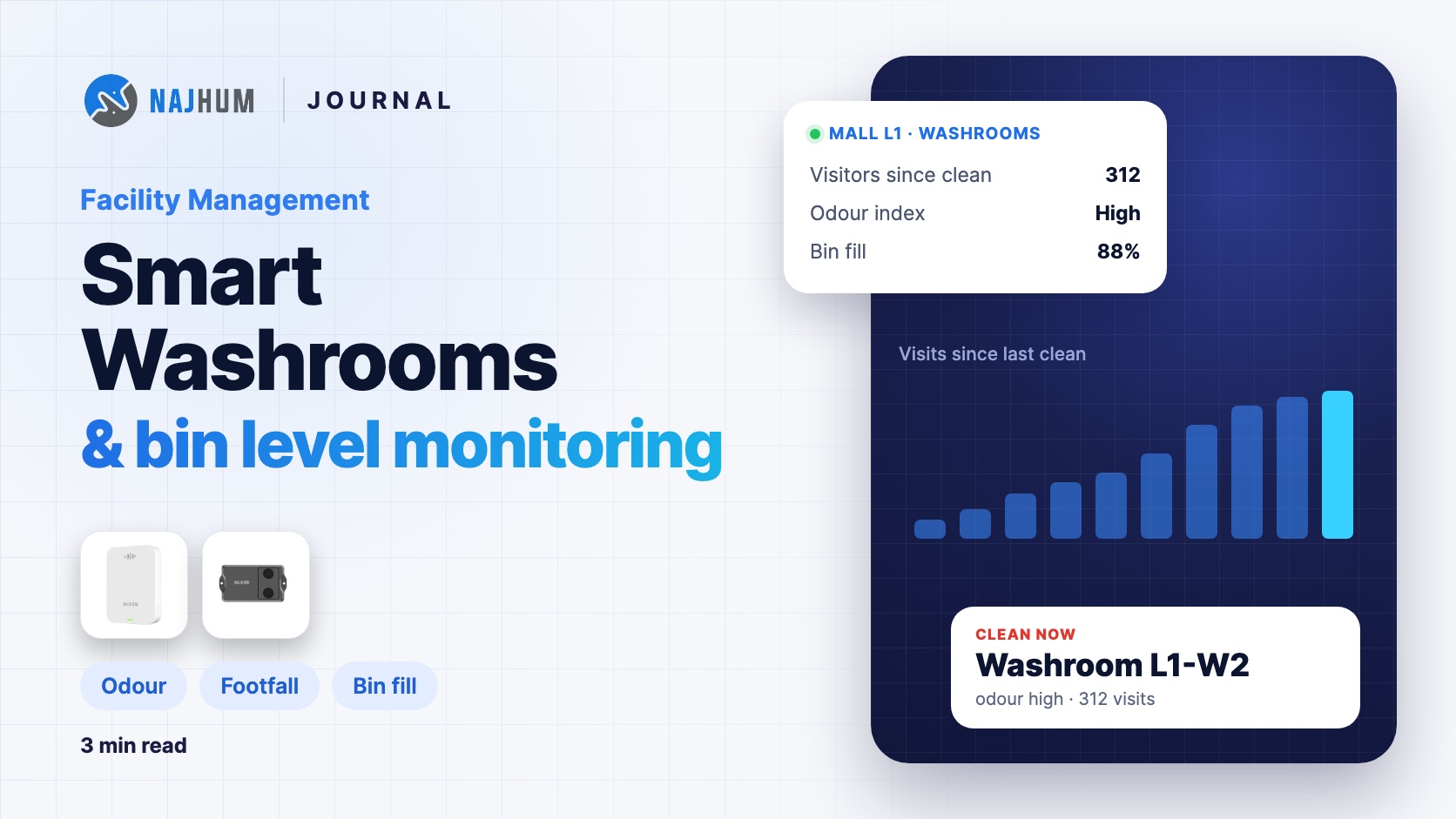
Footfall: people counters at the entrance show how many visitors have used the facility since it was last cleaned.
Consumables and bins: fill-level sensors show when bins are nearly full.
Leaks: leak sensors near cisterns and under basins catch water before it spreads.
312 visits since the last clean and odour rising: send someone now, not at the next round.
From readings to tasks
The goal is not more dashboards but better task assignment. When odour rises or usage passes a threshold, a task is created for the nearest cleaner. Supervisors see which washrooms were attended and how quickly, which helps manage service contracts and staffing.
Bin fill levels beyond the washroom
The same sensors used in washroom bins work for larger waste containers around a property: loading bay bins, compactor rooms and outdoor waste areas. Collections can be scheduled when containers are actually full, reducing overflowing bins as well as unnecessary trips.
Privacy by design
Washroom monitoring must respect privacy. Sensors measure air, counts and levels, not images. People counters at entrances count crossings without identifying anyone.
Measuring the result
Track complaints, response times and cleaning visits per washroom before and after. Many facilities find they can maintain higher standards in busy areas by moving effort away from quiet ones, without adding staff.
Frequently asked questions
Are cameras used in washrooms?
No. Sensors measure air, counts and levels, and entrance counters don't identify anyone.
Does it need more cleaning staff?
Usually not. Effort moves from quiet washrooms to busy ones.
Can bin sensors work outside washrooms?
Yes. The same sensors suit loading bays, compactor rooms and outdoor waste areas.
Clean where it's needed, when it's needed.
Smart washroom and waste monitoring are part of our facility management and hospitality solutions. Discuss your project with Najhum.