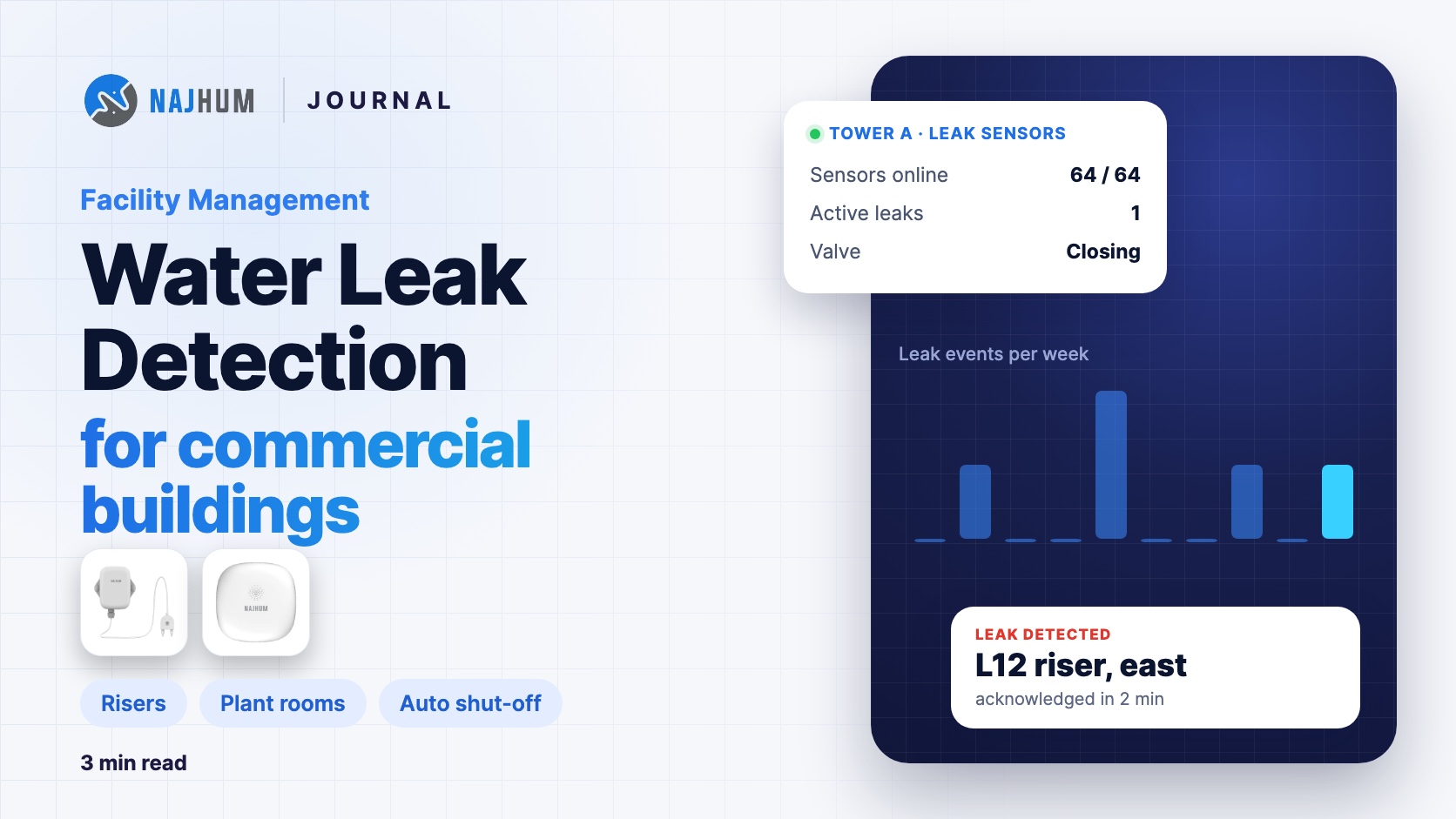
Water damage is one of the most frequent and expensive problems in commercial property. A small leak in a riser cupboard can travel through several floors before anyone sees a stain on a ceiling. By then, the repair bill includes ceilings, flooring, electrical equipment and, often, disruption for tenants or guests.
Leak detection does not stop pipes from failing. It shortens the time between the leak starting and someone turning off the valve, which is what decides how much damage is done.
Key takeaways
Leak detection shortens the time between a leak and the valve closing.
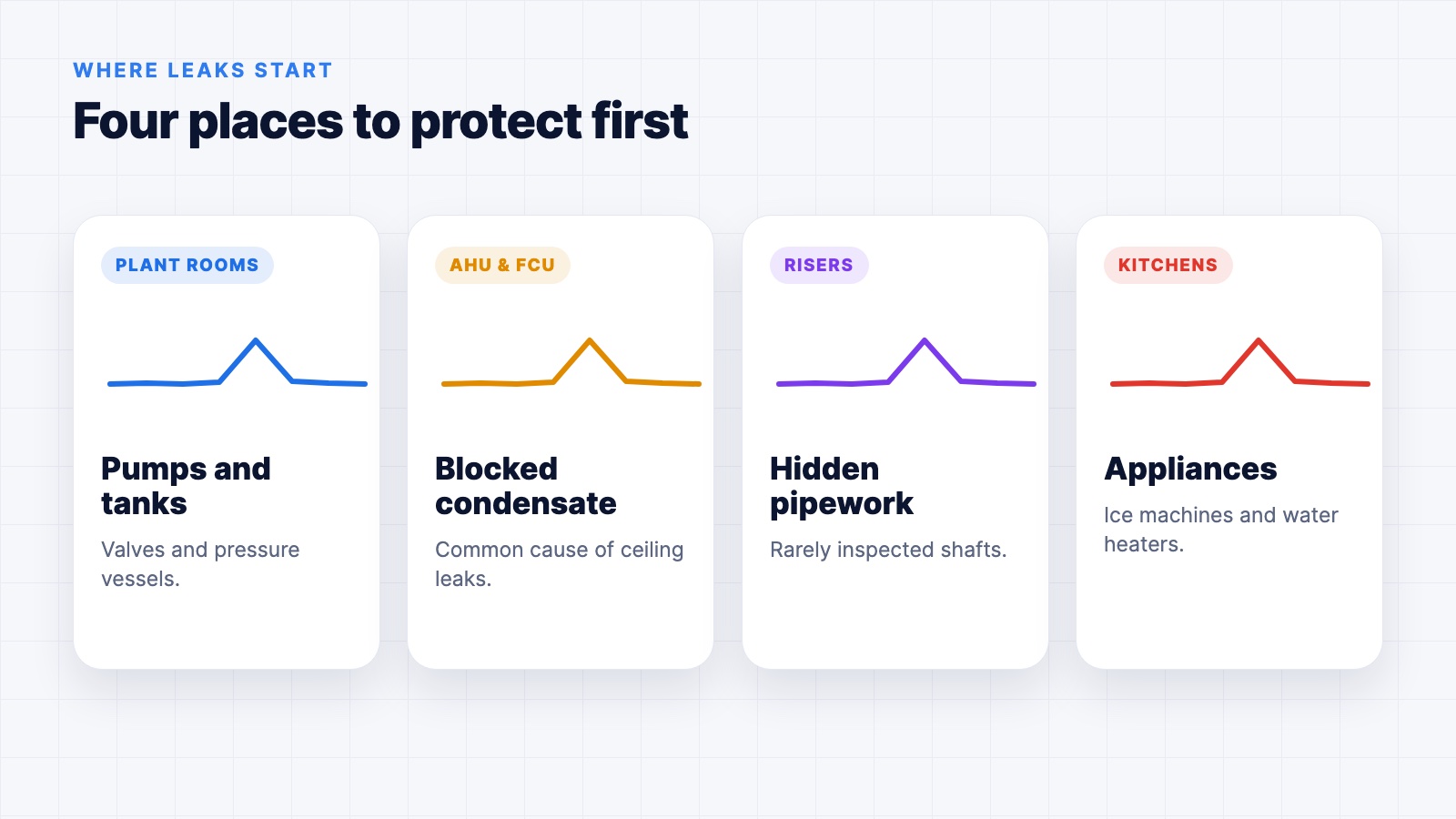
Plant rooms, AHU drains, risers and kitchens are the usual sources.
Spot sensors cover points; rope sensors cover long runs.
Motorised valves can shut off supply automatically.
Where leaks usually start
Plant rooms: pumps, tanks, pressure vessels and valves.
Fan coil units and AHUs: blocked condensate drains are a common cause of ceiling leaks in air-conditioned buildings.
Riser and shaft cupboards: hidden pipework that is rarely inspected.
Kitchens and pantries: dishwashers, ice machines and water heaters.
Washrooms: cisterns, flexible hoses and floor drains.
Server and electrical rooms: where even a small amount of water causes major damage.
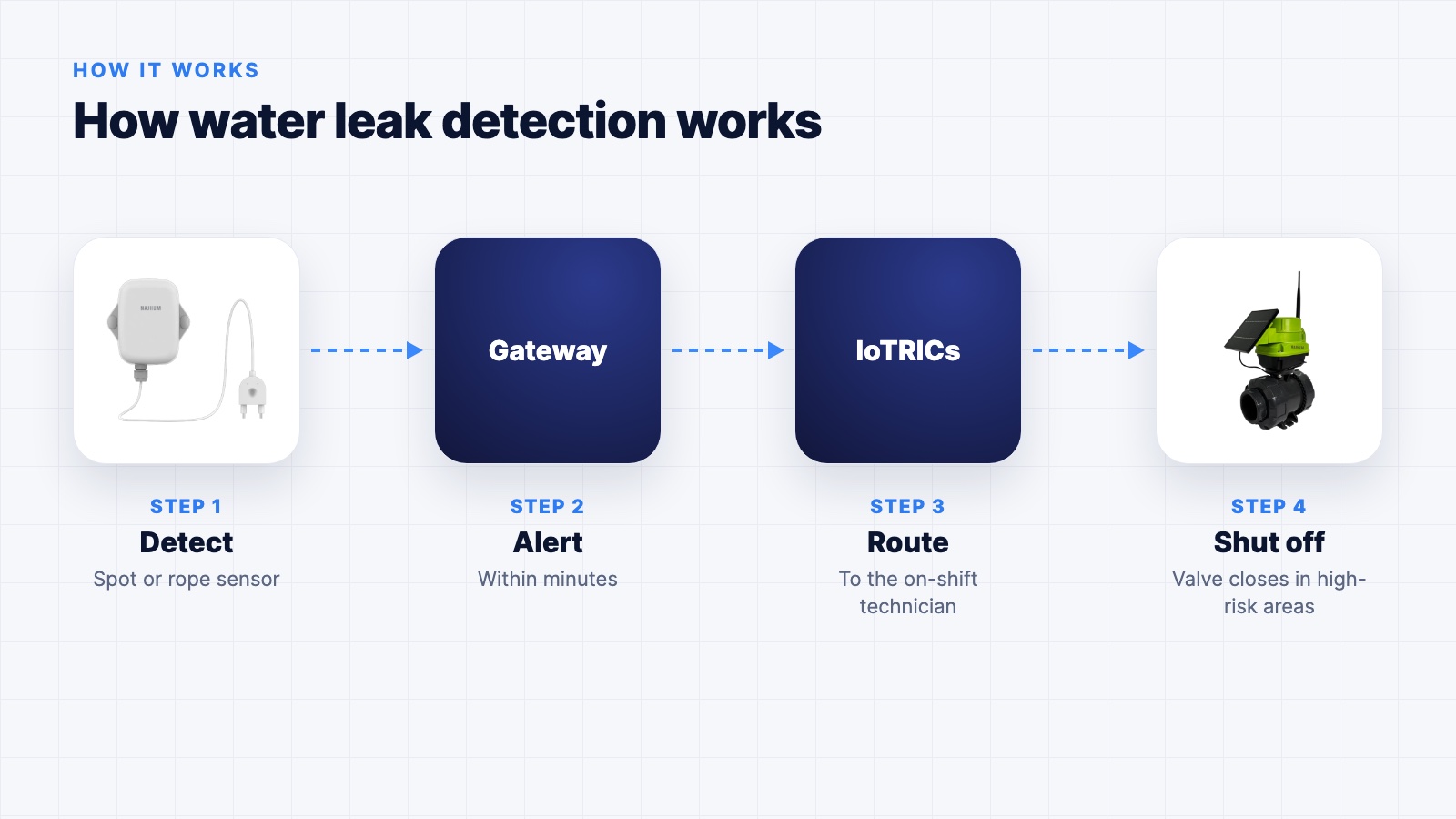
Spot sensors and rope sensors
Spot sensors detect water at a single point and are ideal under equipment, in drip trays and near floor drains. Rope sensors detect water anywhere along a cable and suit long runs, such as around a row of cooling units or along a pipe route. A mix of both covers most buildings.
“Level 12 riser cupboard, east.” Name every sensor so the alert says where to go.
Why wireless makes it practical
Traditional wired leak detection needs cabling back to a panel, which is costly in existing buildings. Battery-powered wireless sensors can be placed exactly where they are needed and moved if the layout changes. Long-range wireless technology reaches basements, shafts and plant rooms that Wi-Fi often struggles with.
Make alerts actionable
A leak alert is only useful if the right person can act on it quickly. Each sensor should be named by location in plain language, such as “Level 12 riser cupboard, east”, and the alert should go to the on-shift technician first, with escalation if nobody acknowledges it. On IoTRICs, the technician view shows open alerts for their shift and the steps to close each one.
Add automatic shut-off where it matters
In high-risk areas, a leak sensor can be linked to a motorised valve controller that closes the supply automatically. This is particularly useful in unoccupied areas or out of hours, where response times are longer.
Measure the result
Track the number of leak events, time to response and any damage avoided. Over a year, this data supports maintenance planning, shows which equipment leaks most often, and can support conversations with insurers.
Frequently asked questions
Do we need to rewire the building?
No. Battery-powered wireless sensors are placed where needed and can be moved later.
What is the difference between spot and rope sensors?
Spot sensors detect water at one point; rope sensors detect it anywhere along a cable.
Can it help with insurance?
A record of leak events and response times supports maintenance planning and insurer conversations.
Catch leaks before they reach the ceiling.
Leak detection is part of our facility management, hospitality and real estate solutions. Discuss your project with Najhum.